Batu Secret Zoo -- Type of Amazing Animals, Facts, Rules, Family-Friendly

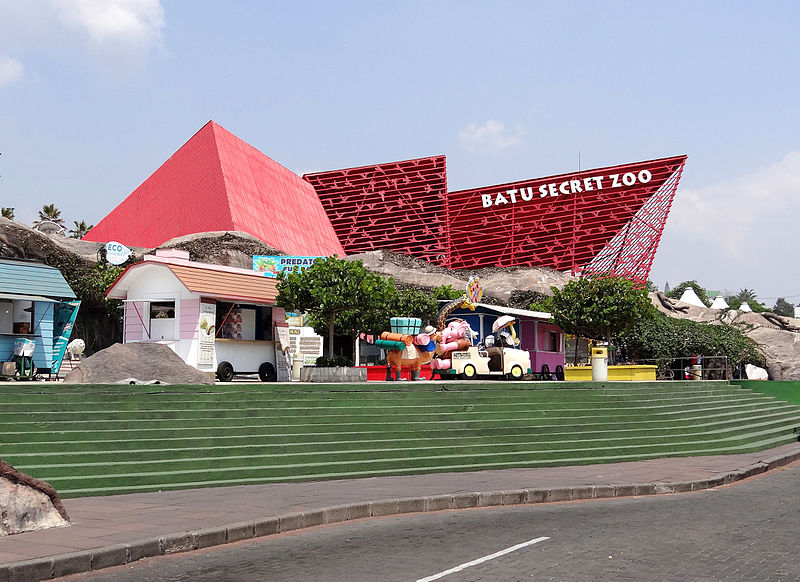
File:Batu Secret Zoo entrance pavilion.jpg 


If you thought Museum Satwa's replicas and specimens were awesome, you've seen nothing yet until you've visited Batu Secret Zoo! Here, you'll enjoy the genuine ones. Batu Secret Zoo will deliver an experience that will satisfy you in more than one way.

Located in Batu, East Java, Batu Secret Zoo comprises an area totaling 14 hectares. It opened in 2001. It's a great place for the whole family and all staff and workers are super friendly. It's more of a modern zoo displaying animals native to Indonesia as well as foreign imported animals.

When you come in through the gate, antiseptic is sprayed on you in order to protect its animals from any potential viruses visitors may be carrying. Then, your trip starts with different types of flying lemurs.

Next, you'll spend some time observing unusual species locked inside metal and glass cages, fences, or aquariums where you'll be amazed. It might seem impossible for anyone just to skip or look at each species with a rapid scan. But if you happen to grow tired at any point in the heart of the zoo, know that visitors could always use an e-bike to cruise along the tracks. Also, you could take fantastic pictures with exotic animals. Employees can even assist you by managing your camera as you pose with any number of likeable animals such as a baby lion or a large albino tiger, if you're daring enough.

You'll find varying kinds of species originating from different parts of the world but Antarctica in this zoo. For example, a hippo doing its usual swimming routine inside an aquarium-looking cage, huge turtles, ostrich, apes, foxes, bears, bulls, emu, elephants, mountain goats, flamingos, giraffes, and much more carrying on in their artificial but comfortable habitats. 

You could even go so far as to tease them by mimicking their sounds, however, you're not permitted to feed them. The exception is Kalongs, a type of large bat. Before its cage there is its favorite food--bananas--which you could grab a piece of with a toothpick and begin feeding them as they hang about.

5 Top-Rated Must-See Tourist Attractions in Indonesia


7 Most Fascinating Facts About Fushimi Inari Taisha

 Fushimi Inari Taisha

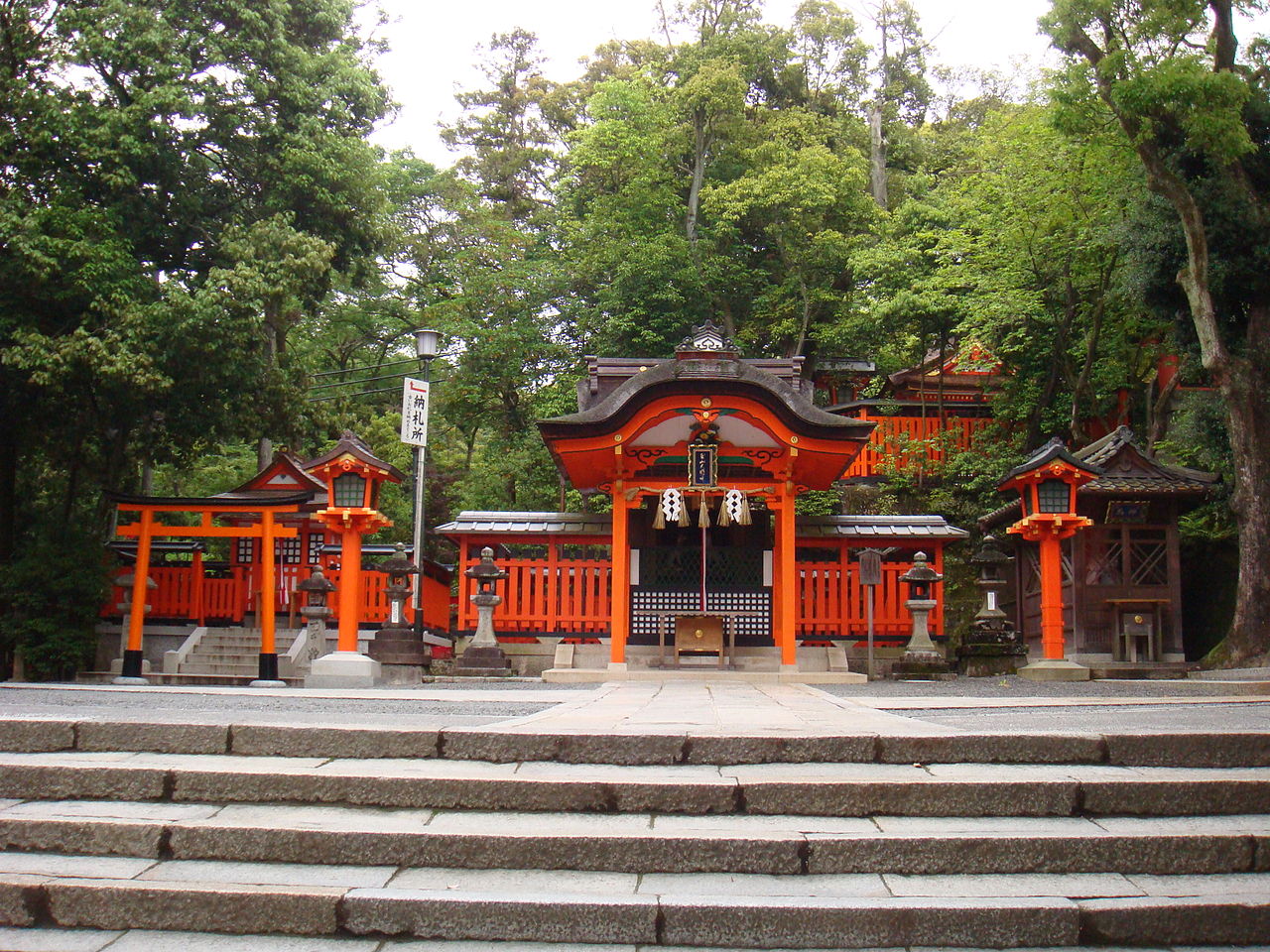
Fushimi shrine entrance


Fushimi Inari Taisha is a very significant Shinto shrine in Kyoto, Japan, and numerous tourists visit it because of its stunning orange gates which they find so inviting.

Located in southern Kyoto at the bottom of Mount Inari, the shrine was dedicated to Fushimi Inari Taisha, the patron of merchants and god of prosperity and rice.  

In order to get to this shrine, you'll have to climb up the mountain that rises 764 feet beyond sea level. Bear in mind that other shrines exist scattered along the trail that extends for around 2.5 miles.

Gain more understanding by reading the most fascinating facts about this sacred shrine.


1.  Fushimi Inari now Japan's oldest Shinto shrine 

Fushimi Inari Taisha, built in 711, is today one of Japan's oldest shrines in all of Kyoto. In fact, by 942, the shrine ranked unusually high among Shinto shrines. Later, the lovely and decorative major shrine building was erected in 1499.

Legend has it that the locals held the belief that a rice cake was tossed into the air, transforming into a swan like magic. The swan next soared to Mount Inari's peak. Quite soon, rice began growing upon the mountain, becoming the main shrine for Inari Okami.

2. It's one of Japan's most visited attractions

Literally millions of visitors from everywhere go here to pray for successful business, improved harvests, and more. But far more people flock here in the New Year to offer their prayers. Others come to admire the shrines as well as stroll through the mountain trails.

Toyotomi Hideyoshi donated in 1589 the Romon Gate, one of the oldest ones, situated in the rear of the shrine's central hall, where guests pay homage and even provide small offerings.

3. It has many small shrines

The complex, which has several smaller sub-shrines scattered along the four kilometer trail around the mountain, consists of 5 main shrines, upper, middle, lower, and 2 auxiliary shrines. But the most holy among them is Mount Inari, regarded as the god of rice.

To reach the top, you must pass through 1000s of Torii gates, situated behind Fushimi Inari, and it's precisely here you'll come across the hiking trail that takes you up the mountain.

4. The shrine was moved

Originally standing on Inariyama hill in Kyoto, the Hata family relocated Fushimi Inari Taisha elsewhere permanently in 816.

There was even a change of guard occurring back in 942, when it received the highest honor among Shinto shrines.

Many centuries passed until in 1499 the lovely and central shrine structure was erected. More recently, Japan designated the shrine as a significant Cultural Property. 

You'll observe thousands of mounds on the mountaintop being used for worship in private.

5. There are many fox statues

The twelve fox statues surrounding the shrine is a conspicuous feature that's impossible to miss. Japanese consider the foxes gods' messengers as well as connected with the rice god.

Moreover, the fox statues hold keys in their mouths, which symbolize that they are the defenders of rice granaries. That's why foxes are not only well respected but also worshiped.

6. The Torii are very popular attractions

In the rear of the shrine's central grounds you'll find the Senbon Torii, which serves as the entry to the Torii gate. In addition, it marks the start of two parallel, thick rows of gates, which attract the majority of tourists to visit Fushimi Inari Taisha. 

As a traditional gate in Japan, Senbon Torii is generally located at the entry of or just within a Shinto shrine. It actually represents the transition from the everyday profane to the holy. 

Every one of the renowned gates is also a handsome donation via either a private citizen or Japanese business individual. They are motivated to donate hoping to receive future fortune and good luck.

The orange and reddish color of all such gates symbolizes the sun.

7. Reaching the shrine is no small feat!

Climbing to the mountaintop is rather an uphill challenge. If you're not physically inclined, slowly climb here at a comfortable rate. Although the trail is lengthy and goes on rising, fortunately there exist platforms where you can halt by and take a quick break. The hike to Mount Inari can take up to 60 minutes. But the view from the top is quite beautiful. You'll find some cafes which serve dishes like Inari Sushi.

Most Famous Must-See Tourist Attractions in Japan


12 Top Tips for Maximizing Sapporo Snow Festival Experience

Sapporo Snow Festival

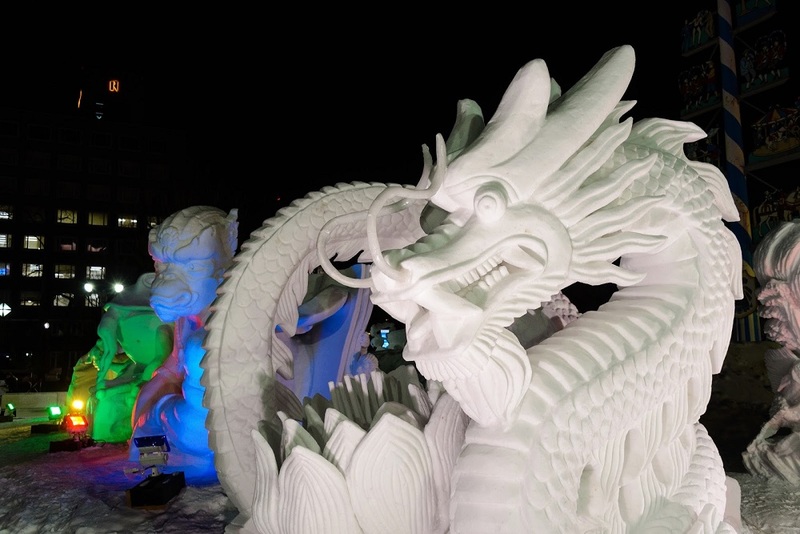
Sapporo Snow Festival Sulpture


By using this list, you'll enhance your overall experience during the Sapporo Snow Festival. You'll not only enjoy it more but will wish to return again and tell everyone you know about it. Let's get started.

1.  What is the typical weather like during the festival? 

Since February is the coldest period of the year, the average temperature is around -3.4 C, plus it snows frequently. So, dress appropriately when you drop by. 

2. What are additional ways to enjoy the festival, besides watching snow sculptures? 

Every day projection mapping and stage performances take place at each site. Plus, check out the skating rink and ski jump.

3. How big is the Odori Park?  

The park is about 1.5 km in length, boasting a total area of 7.8 hectares, stretching from Odori Nishi 1 chome all the way to Odori Nishi 12 chome.

4. How long does it usually take to get around each site? 

Anywhere from 60 to 90 minutes.

5. Is there an ideal place so the entire family can play in the snow?

The Tsudome site provides playground equipment, snow rafts and a snow slide.

6. What's a highly recommended place along here?  

Climb to the top of the Sapporo TV tower to look down at the amazing view of lit-up snow sculptures.

7. What or who is the main star in the snow festival?  

It's a cute snowman who still hasn't been named.

8. Can anyone buy Sapporo Snow Festival related souvenirs while participating? 

Yes. They are sold and designed exclusively for every year. For example, in the 71th festival, 30 types of souvenirs were available to everyone. 

9. What are great restaurants around here?  

One such eatery that offers all sorts of gourmet dishes that are representative of winter flavors of Hokkaido is Hokkaido Food Plaza, located at 6 chome of the Odori site.

10. How could you know what's happening at the various sites?  

The Sapporo TV Tower is always streaming live camera footage of all such sites.

11. How do I get to the Odori Park and additional sites outside of Hokkaido?  

Fly to New Chitose Airport, and then board a train to JR Sapporo Station. The train trip lasts usually 36 minutes, and trains come by often from 8:00 AM to 7:00 PM.

12. What's the best way to watch all the sites?  

You are advised to use public transportation as well as the shuttle bus to catch all the exciting stuff happening.

Odori Park sits near Odori Station of the Subway Namboku Line, Subway Toho Line, and Subway Tozai Line.


Most Famous Must-See Tourist Attractions in Japan


8 Top Must-Know Facts About Itsukushima Shrine

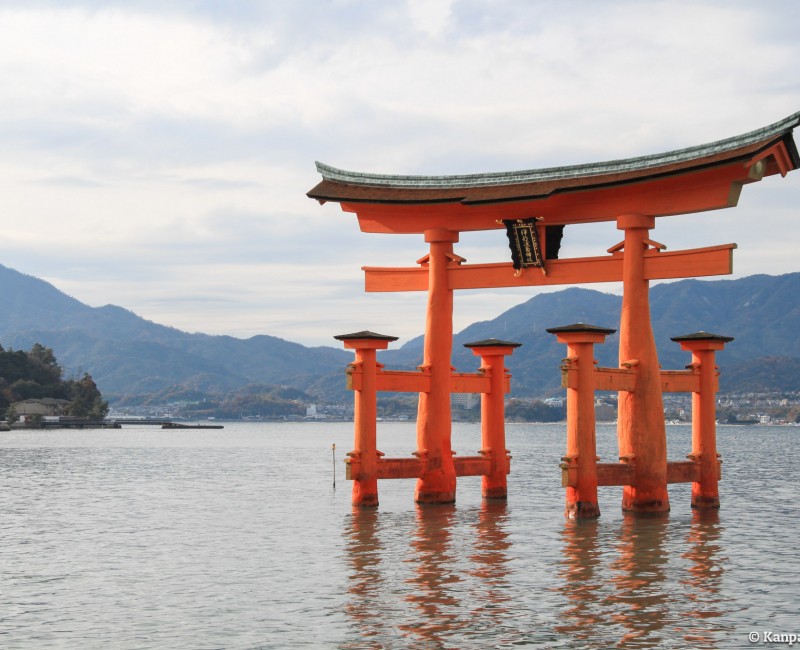
 Itsukushima ShrineItsukushima-jinja (Miyajima), Floating torii gate at high tide


Itsukushima Shrine is located on the island of Itsukushima, in the Seto inland sea. The site itself has been a holy place from the 5th century, even prior to the shrine materializing later on.

Its construction started in the 6th and ended in the 12th century. The shrine's architecture talks about the amazing technical and artistic skills of all master architects involved in the project.

One notable and distinctive feature of the shrine is how it blends perfectly with the nearby sea and mountains. Its contrasting colors jump out at you and result in an unmistakable scenic allure.

As one of Japan's most popular attractions, the shrine is renowned for its artistic gate that sits on its borders. From here, visitors could observe the forest, ocean, and Mount Misen's soaring peak.

Surprisingly, you'll find 17 various structures hidden inside the complex, such as the Sessha Marodo-jinja and the Honsha shrine.

Here's my list of 8 top must-know facts about the Itsukushima Shrine.


1.  It's a UNESCO World Heritage Site

Situated on Miyajima Island, more specifically, in Hiroshima Prefecture, Japan, Itsukushima Shrine has become a UNESCO World Heritage Site. It was erected on piers over the Seto Sea's water.

The shrine displays lovely colors, plus the blue sea, green forest, and the grayish tones of the admirable peaking Mount Misen.

It's regarded as one of Japan's significant Three Views along with Amanohashidate and Matsushima Island. 

2.  Its architecture is unique

The shrine's site is stunning. The overall artistic design of these shrines harmonizes with nature in a seamless fashion.

According to traditional Japanese architecture, the structure had to be in a natural setting, surrounded by nature, which was their standard of beauty. The work demonstrates Taira no Kiyomori's skill. Although this shrine has seen two reconstructions, it never strayed from its original style and was restored repeatedly as well.

Because of its uniqueness in architecture and cultural and religious importance, the shrine functions as a huge magnet attracting millions of visitors yearly.

3.  It was extremely popular throughout the Edo era

Even prior to the shrine being raised on this sacred island, pilgrims were in the habit of coming here during the Edo era to pray mainly for the Seto Inland Sea to be safe.

However, when Taira no Kiyomori arrived to worship near the ending of the Heian period, word of mouth about the incident circulated widely and still more pilgrims visited.

Ordinary people like tradesmen and fishermen paid homage here while sailing the Seto Inland Sea. The majority of the inhabitants who resided in Japan's western region would often come to this shrine to perform their acts of worship.

4.  The shrine was built in dedication to three sisters

Itsukushima Shrine was constructed in order to be dedicated to Susano-o no Mikoto's three daughters: Tagitsuhime no mikoto, Tagorihime no mikotom, and Ichikishimahime no mikoto.

These sisters are in fact three female deities and considered goddesses of storms and seas.

Taira Kiyormori held the belief that the island itself was a home to bodhisattva. Since the name Itsukushima translates island dedicated to the gods, many Japanese believed the whole island was a god.

5.  Scenery surrounding the shrine changes with the tide

While the tide is high, both the shrine and the O-Torii gate seem to be gracefully floating on the water's surface. This "mirage" vanishes during low tide.

In addition, there are three ponds known as mirror ponds lying in the sand that's everywhere around the shrine. 

In particular, the towering shrine, O-torii gate stands out, and also conveying the real impression of floating in the sea during high tide, it gives a marvelous experience to all fans of Japanese performing arts.

6.  Common people could not visit the shrine

Not only were common people not permitted to come here, both births and deaths occurring on the island were forbidden on account of being seen as pollution. Another reason was because the whole island was regarded as being holy. So, the lack of common people here contributed largely to the island's purity. Even pregnant women were not permitted on the island! Only after giving birth could they visit the shrine.

Aging people and everyone terminally sick are always made to go to the mainland, and it's a practice that continues now. Moreover, funerals and burials are not held here.

7.  The shrine's construction was inspired in a dream

Many of the shrines erected in the 16th century showcase power, excellence, and architectural beauty. The Taira who built this shrine, was engaged in maritime trade.

Legend claims that Kiyomori dreamed an old monk instructed him to erect a shrine and as compensation, he would dominate Japan.

Kiyomori paid for the shrine's construction, which was to demonstrate his reverence for the tutelary god of navigation as well as to be a base for carrying out maritime-related activities.

8.  The noh stage is the only one on water in Japan located at the shrine

In the whole nation, this happens to be the only Noh stage built over water. The Mori clan gave it to the shrine during the period of the Combatant States.

The Asano clan repaired the stage during the Edo period. Urns full of water are generally put beneath the stage to enhance the sound quality. However, this isn't possible in this shrine, but its floorboards have been designed to cause a similar effect.


Most Famous Must-See Tourist Attractions in Japan


7 Top Must-Know Facts to Visit Arashiyama Monkey Park

 Arashiyama Monkey Park

While you're busy touring Kyoto, you'll come across many worthy tourist attractions. But there is one site that a few people know of, and it's located on Mount Arashiyama. The Arashiyama Monkey Park is literally a playground for many happy Japanese Macaques, who are always unusually eager to snack on what you may have on you. Here's my list of top facts worth knowing about this monkey park.


1. The snow monkeys are iconic

You may have heard of or seen them before. They are well-known Japanese Macaques, or Snow Monkeys, which documentary films and magazines have featured in the past. Snow Monkeys are characteristically playful and endearing and the park's main attraction and a few people have the opportunity to observe them near and personally.

2. Incredible vistas of the city

Although it may be physically challenging for some visitors to climb up to the park, the panorama that you'll enjoy at the mountain peak will certainly reward you generously. So, bring your best walking shoes and a plastic bottle of water to enable you to hike to the monkey park. It'll take between 30 to 40 minutes to get there.

3. Feeding the Snow Monkeys

For sure, the highlight of your journey here is the opportunity to hand feed the monkeys. The park actually provides the correct monkey food that you could purchase so you can then offer it to the monkeys. Be fully prepared: these monkeys will come seeking their next feeding from your palms.

4. Visitors are locked up inside the cage!

Strange as it may seem, this monkey park gives its monkey residents the chance to watch their visiting guests inside cages. Isn't this supposed to be the other way around? Perhaps, however, that's the practice when anyone new comes here wanting to give food to the monkeys. In reality, joking aside, these monkeys could grow extremely aggressive in respect to food and that's why the cage is used, to keep people safe.

5. Monkey Quizzes

Everyone's knowledge regarding monkeys shall be tested while you get to provide answers to comical quizzes which the park offers. Do not feel depressed if you get any wrong. It's a great way for learning about monkeys in general as well as understanding how they reside up in the mountain.

6. Freedom to watch the monkeys

Arashiyama Monkey Park is perhaps the only area in Japan that allows you to freely watch wild Snow Monkeys in their natural habitat. You'll frequently see them relaxing everywhere, grooming one another, clashing with each other, and you might even get the opportunity to see one of them coming near you. If this occurs, don't try to pet it!

7. It's not only monkey business

If you visit this park, you'll imagine that you'll only be playing around with a bunch of monkeys. Sadly, that's not the reality. Although these monkeys may grow used to people after so many visitations over the years, they are yet wild animals. For example, if you refuse to obey the rules such as "Don't look at the monkeys in the eyes," injuries and accidents can occur. The lesson here is: obey all the park rules. 


Most Famous Must-See Tourist Attractions in Japan


7 Top Must-Know Facts About Arashiyama Bamboo Forest

 Arashiyama Bamboo Forest, Kyoto, JapanBamboo Forest


Only outside Kyoto in Japan, you could visit a majestic site sometimes called either Arashiyama Bamboo Forest, Arashiyama Bamboo Grove, or Sagano Bamboo Forest, which is Japan's most renowned bamboo forest with walking pathways that has a dazzling effect on all tourists on account of its magic. I have put together several noteworthy facts about this unusual forest that borders the city. It's definitely a must-see, majestically filled attraction you won't want to miss as you tour this part of Japan.


1.  Arashiyama Bamboo Forest is located in Kyoto's western outskirts.

The capital city lies in the Kansai Region on the biggest and most populated Japanese island Honshu. Kyoto, which has almost 1.5 million people, is part of Keihanshin that includes Osaka and Kobe and is home to almost 20 million inhabitants.

Moreover, Kyoto is regarded as Japan's cultural capital and once Japan's capital until Tokyo was adopted as the new capital. It's a major tourist destination home to many palaces, temples, gardens, and enchanting forests.

2.  It comprises mostly of one kind of bamboo trees

Many tourists visit the highly popular bamboo forest because of its stunningly scenic walkways around it. The forest contains mostly a certain kind of bamboo referred to as Moso Bamboo. 

This kind of enormous timber bamboo is strangely not native to this region but really from Taiwan and China. This type of bamboo has seen successful introduction in big portions of Japan.

It's truly a huge kind of bamboo for it could attain heights such as 28 meters, or 92 feet, which is a feature adding to the striking sights everywhere in the forest.

3.  These trees make a unique sound

As you must have already seen, these trees are located rather closely together throughout the dense forest. When combined with their soaring height and a little wind, the bamboo forest creates an amazingly captivating noise. 

What's even most astonishing about this forest in particular is that this amazing sound has been listed in the "100 soundscapes of Japan." The Japanese Ministry of Environment gathered this list so their people can enjoy the wondrous sounds of nature, as though it were speaking through its own "native tongue."

4.  The forest's pathways could grow very crowded at times

It may not always be so simple to listen to the natural sound that these bamboo trees make on account of the hordes of tourists visiting through the walkways of this majestic site, especially during weekends and holidays; the human factor tends to interfere or block out the sound nature is trying to convey.

This just means that you truly must drop by here in the early morning or later in the evening hours, and certainly never on the weekends, for that is when a lot of Japanese residents usually take strolls.

5.  A famous temple sits across the river, too

Although the forest is home to many beautiful walkways that permit anyone to enjoy hours of the enchanting scenery, there's another tourist attraction not far off.

One of Japan's most renowned temples is situated across the Katsura River, known as the Tenryu-Ji Temple. It's Kyoto's most significant temple and the central temple belonging to the Rinzai sect of Zen Buddhism.

This intriguing temple was constructed during the 1339 and 1345 time period and was given a UNESCO World Heritage Site status back in 1994 on account of its historical and cultural importance. There's the assumption that it was erected close to the bamboo forest in order to ward off evil forces as well as for good luck.

6.  A very famous Japanese actor used to reside near the forest

Only west of the lovely temple you could see the old residence once owned by a leading Japanese actor named Denjiro Okochi.

His beautiful villa together with gardens situated in Kyoto's outskirts have been preserved well and today serves as both a tourist attraction and where you could relax and drink tea.

Because of its elevated terrain along the slopes of Mount Ogura, some parts of the garden provide incredible views of Kyoto.

7.  Tourists have been coming here since as early as the 8th century!

The Japanese government has designated the Arashiyama area as a National Historic Site as well as a place of Scenic Beauty; that's certainly no shocking news.

The forest-shrouded hills, breathtaking vistas from the Katsura River, and extraordinary bamboo forest have proven popular tourist destinations for many Japanese, particularly the rich since the 8th century.

But the wildly popular attraction to this day has been through a scenic boat trip for appreciating the natural marvels and admiring the varying colors as the seasons change.


Most Famous Must-See Tourist Attractions in Japan


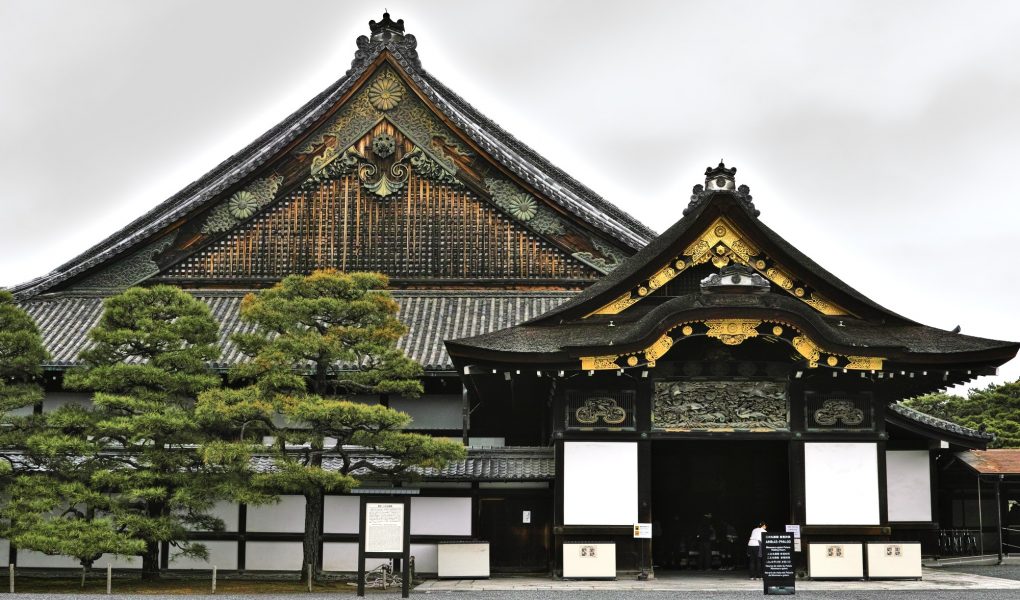
7 Top Must-Know Facts about Nijo Castle in Japan

 Nijo Castle, JapanNijo Castle, Kyoto. Credit: bethom33. Licensed under CC. Original modified.


1.  Nijo Castle has the renowned nightingale floors

Located in Nijo Castle, the nightingale floors are famous for their singing quality. How is this even possible? Well, as you walk just normally through the gorgeously decorated corridors, regardless of how you step, whether lightly or otherwise, believe it or not, a sort of chirping sound will result and reveal where precisely you are in the castle! You can't escape detection here!

In fact, these floors were designed specifically to create chirping sounds as anyone walked on them. The floorboards' nails would pass through and rub against a clamp or metal jacket and create chirping noises. Seems like someone wanted every guest's whereabouts fully known for practical security-related reasons.

2.  Nijo Castle was home to the powerful Tokugawa Leyasy

Built in 1603, Nijo Castle required the most serious security measure possible in order to protect Tokugawa Leyasu, who was the first shogun belonging to the Edo Period, as well as to serve in Kyoto as the Tokugawa shogunate's heart of power.

3.  The Castle's Karamon gate at its entrance symbolized authority 

The actual grandiose Karamon gate which led to Nijo Castle represented not only great authority but also proclaimed the reputation of the structures situated behind the gate. Fascinatingly, Karamon entrance was very exclusive, reserved just for receiving the shogun when he visited the castle, like having your own private entrance.  

4.  Ninomaru Palace hidden inside would both awe and intimidate guests 

Once crossing the gate, almost immediately you'll see Ninomau Palace. Its sole role was meant to impress everyone entering and even filling them with varying feelings of intimidation.

Firstly, Ninomaru Palace comprises 5 linked structures that were built with superb Hinoki cypress. Every building was elaborately adorned with wood carvings, gold leaf, and lovely paintings procured by the artists belonging to the Kano School.

Needless to mention, this lavish decor fulfilled the purpose to drive a strong impression into all visitors as well as to re-verify the shoguns' unwavering power.

5.  The self-guided walk via Ninomaru Palace reveals several clues that relate to the shoguns' lives

As the self-guided tour began, taking you through many rooms that shoguns used in the Ninomaru Palace, it told how they operated and ruled. 

The tour begins by visiting Tozamurai-no-ma, which is a waiting room for daimyo who came to the castle. You'll admire the images of leopards and tigers gracing the walls. But such depictions were surely meant to strike fear into the hearts of guests there.

Then, you'll go through Chokushi-no-ma Room and here, shogun receives the Emperor's messengers coming directly from the court. These envoys sat on the higher row while the shogun himself sat on the lower level; this seating arrangement served to guarantee that the shogun would demonstrate respect and confirm the emperor's superiority.

Perhaps the most stunning is Ohiroma Ichi-no-ma, or Great Hall. It's 48 tatami mats broad and it was where the shogun and daimyo would meet.

6.  Historical proclamation of shogunate's end occurred at Nijo Castle 

The official announcement that told about the termination of the Tokugawa rule happened at Nijo Castle. More specifically, it occurred at Ninomaru Palace in the Great Hall in October 1867. In addition, this date marked the restoration of imperial reign.

7.  Nijo Zaiban Samurai guarded Nijo Castle day and night

Samurai guarded the castle day and night during peaceful times. Shogunate dispatched the Nijo Zaiban samurai. In fact, two groups consisting of 50 guards each were stationed permanently at this castle. Ban-sho, Guardhouse, was used as a barrack.


Most Famous Must-See Tourist Attractions in Japan


12 Must-Know Guggenheim Museum Facts

  Guggenheim Museum, Bilbao Guggenheim Museum at a Glance Guggenheim Museum has proven to be the most significant structure of Wright's ...