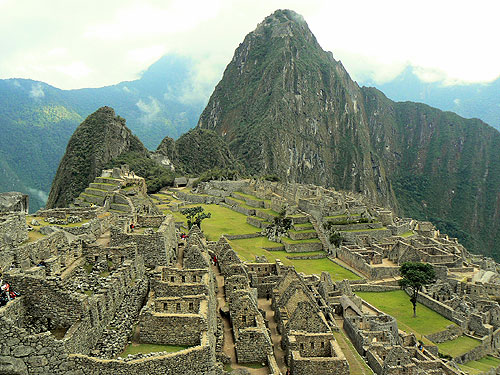
5 Intriguing Facts about Machu Picchu -- 7 Wonders of the World

Machu Picchu, Peru


Machu Picchu has been confounding the best minds for a very long time.

Nobody blames Peru for boasting of being the home to Machu Picchu; not only a top-ranking tourist attraction but also considered as one of the 7 Wonders of the World.  Gorgeously located within the enchanting Andes mountain range at a height of 7,000 feet over sea level, Machu Picchu is still one of the world's least understood archaeological places. Erected at the height of the Inca's might, these ruins represent an extraordinary example of the Inca's stunning craftsmanship and stonework. Today, visitors can reach this perplexing 15th century site via train or by hiking the renowned Inca Trail. Here's my list of 5 most intriguing facts about Machu Picchu.


1.  The actual name of this old city which isn't Machu Picchu, was never lost

An American adventurer by the name of Hiram Bingham, in 1911 found the Inca site which is popularly called Machu Picchu, and started a scientific investigation which would make the place world renowned. As he explored the Urubamba Valley, a native farmer sent him to Machu Picchu, also describing the location in his indigenous language. We can't truly regard Machu Picchu as the Lost City of the Incas, for there were several people residing in the area who already were aware about the site before the explorer came.


2.  It's unusually well-preserved & 75% original

When the Spanish initially reached Peru in the 1500s, they destroyed several Inca holy sites, generally substituting them with their firmly believed to be superior Catholic church alternatives. Since they never discovered Machu Picchu, tourists today could visit it. The attraction's preservation could be credited to its distant location; however, there exists evidence that indicates the Incas themselves might have purposely burned walkways that led to the site.

As Hiram Bingham explored the site, he discovered Machu Picchu shrouded in forest vegetation that was soon removed to show the beautiful ruins that we know now. Although some sections of the citadel have been restored, Machu Picchu still remains significantly one of the better preserved archaeological sites during its time, retaining about 75% original. Today, tourists can just see approximately 40% of the ruins, while the other 60% remain hidden by vegetation.

To preserve the ruins as well as keep the tourist business aspect sustainable, there's in place a no-fly restriction above Machu Picchu, a one-way walking rule to decrease foot traffic, and a daily limitation of 2,500 tourists each day.


3.  Machu Picchu lies deep in the jungle

Located deep in the Peruvian cloud forest, Machu Picchu is surrounded by verdant green flora. Visitors will encounter a wide range of plants, animals, insects, and more than 300 types of orchids. Generally, an abundance of llamas could be seen wandering about the site, despite these domesticated creatures are not usually found running in the wild. Fortunate visitors might even glimpse at the rare Andean bear, which is the only of its kind found in this part of the world, South America.

If you decide to go hiking the traditional route to the site through the Inca Trail, you shall be generously rewarded as you come across more of this area's unbelievable biodiversity while traveling via mountain valleys, passes, and many unique micro-climates. If not physically inclined, you can always board a train to Aguas Calientes prior to taking a bus that goes straight to Machu Picchu, helping to make the attraction accessible for tourists of all ages.


4. A lot of the construction was erected without using mortar

The Incas are famous for their advanced stonework and construction skills, and when you come by here, you'll see how truly magnificent their constructions were. One of the methods they utilized in their most holy buildings is called ashlar. Using this method, workers excessively polished and carved big granite stones, painstakingly molding them to fit perfectly together, never using clay or mortar. This stonework proved to be so uncommonly precise that not even a blade of a knife could fit in between these stones.

This kind of construction has also proven to be remarkably earthquake resistant, for it permits the stones to shift barely and then resettle with no wall collapsing. There's even evidence the Incas knew that the structure was built on many tectonic fault lines and fractures, and skillfully avoided erecting directly above these little fissures.


5. It was utilized for astronomical observation

Astonishingly, the Incas possessed much knowledge about the precise position of the moon, the sun as well as the stars. Two times each year, during each equinox, the sun would sit directly over Machu Picchu's holy Intihuantana stone, without a shadow.  But at dawn on June 21, as the initial sunlight rises over the mountains, this light happens to always shine through one of the Temple of the Sun's windows, brightening a ceremonial stone. 


Fired Travel Agent Tells the Public the Airline's Dirty Secrets, How to Turn Them Around In Your Favor, Including How to Fly Practically Free!




8 Top Must-Know Facts About Raffles City Chongqing

 Raffles City Chongqing

img-CQraffles2020


Raffles City Chongqing breathes new life to the well-known and historic Chaotianmen Square. Searching for new methods to urban design, the mega 3D city and elaborate complex provides a catalyst for sparking downtown regeneration, producing a new iconic symbol for Chongqing, a major city in western China. Here's a list of 8 top must-know facts.


1.  Standing at the convergence of China's two significant rivers, Jialing and Yangtze, Raffles City Chongqing today with its design brings to mind the site's once historic role as a maritime trading post and imperial city gate.

2.  The project resumes the firm's examination of livable urban communities, vertical neighborhoods, and superbly linked public spaces.

3.  Situated within a densely developed grid, the structure, combining hotel, office, residential, serviced apartments, retail, as well as recreational facilities, has initiated regeneration around its waterfront area.

4.  It stands at the center of one of China's most rapidly growing cities where there are limited public parks.

5.  The structure provides more than 30,000 square meters of public space that includes outdoor and even community meeting spaces.

6.  The designers did an amazing job at integrating a number of access points in accord with the city's natural undulating topography, a high-tech traffic diversion system, and finally, a new public pathway which crosses through 5 levels of the mall to offer a straight connection between Chaotianmen Square and podium park.

7.  The retail podium is topped with a wide public park that overlooks Chaotianmen Square. The gateway park consists of a network of green and open spaces which displays public art exhibits as well as sculptures, a series of water features, and interactive fountains.

8.  It features a 300-meter-long horizontal skybridge known as "Crystal" which links the top of 4 of the skyscrapers and is now the world's 2nd highest after the Kingdom Centre.

Most Famous Must-See Tourist Attractions in China


Singapore Tallest Indoor Waterfall -- Facts, History, Hours of Operation

 Singapore Tallest Indoor Waterfall


Singapore tallest indoor waterfall, the world's highest ranking ten-story airport, Jewel Changi Airport, which cost $1.25 billion to construct and designed by famous architect Moshe Safdie, now has scored another crowning achievement: it's home to the world's tallest indoor waterfall called The Rain Vortex.

The glowing attraction is the airport's 40-meter high HSBC Rain Vortex that cascades through a large oculus in the center of Jewel. It's an architectural wonder. The Rain Vortex, a 7-story achievement of both design and engineering and inspired by Singapore's tropical rains, astonishes everyone the instant s/he walks in the door.

It's really a dramatic sight which is generally heard even before it is seen while passengers leave the dining and retail zones that surround the airport's outer sections and go toward the middle, where they are greeted with the thundering sounds of a waterfall which seems to be falling from the sky.

The captivating light and sound show runs from 8:30 pm until 12:30 am everyday at hourly intervals. As the show takes place, carefully regulated flow of water from the edge of the oculus produces a cascading effect which interplays with projected light imagery.


Most Famous Must-See Tourist Attractions in Singapore


Best Guide for Maximizing Everland Experience -- Seoul, Korea

 Everland, Seoul, Korea

Everland


Because it's South Korea's biggest theme park, Everland can easily overwhelm you with its mind-blowing vastness. There are indoor and outdoor rides and a zoo as well.

In addition, since it's located in Yongin, traveling to Everland is an adventure for the journey there requires using public transportation that could take up to 2 hours, if leaving from Seoul city.

Like everyone else, we searched for practical solutions to make our holiday trip to Everland not only easier but also affordable. So, we have put together the guide below. A major part of the battle is already won after arming yourself with a most comprehensive guide of Everland.


New Covid-19 Steps

Masks must be worn at all times, and you're advised to practice social distance as much as possible. Up to groups of 8 are permitted in Everland, of which no less than 4 people must be already vaccinated. Know that operation of narrow indoor sites and even parades have been temporarily suspended. 


Pre-trip Planning


1) Pre-order your tickets online 

Though you can still buy tickets at Everland itself, today nobody lines up for ticket purchases. Save precious time by attaining your entry tickets before going there.

Tickets generally cost around $56 to $67 for adults, depending on when you are visiting. But you may buy them at a discount online. 


2) How to get to Everland from Seoul City

There are many ways to travel from Seoul to Everland; I have listed a number of options:


(1) By Subway/Metro (Yongin Ever Line)

-- Seoul Station to Suwon Station
-- Transfer to Bundang Line: Suwon Station to Giheung Station
-- Transfer to Everline Line: Giheung Station to Jeondae Everland Station

From Jondae Station, board the free shuttle bus to Everland.

Approximate time:  122 minutes


(2) By Public Bus

-- Bus No. 5002 from Gangnam Stn. Exit 5

Approximate time: 40 to 50 minutes


(3) By Shuttle Bus

An Everland bus departs from main places within Seoul like Gangnam, Hongdae, Myeongdong, directly to Everland. You could buy the ticket while boarding the bus.

Approximate time:  50 to 70 minutes


3) Avoid peak periods & Korean Holidays

Besides the busy weekends, avoid summer vacation and holidays such as Korean Thanksgiving Day (15th day of the 8th lunar month), Christmas, and New Year.


Everland Arrival


4) Everland's Themed Zones

Everland is divided into five different themed zones, beginning from the central entrance in an anti-clockwise direction: Global Fair, American Adventure, Magic Land, European Adventure, and Zootopia.

You'll find paper maps available as you enter. Grab one to orientate and plan your trip there. It may be a good idea to circle those rides you must try before leaving. T-Express is one of the world's most popular thrilling wooden roller coasters.


5) Must-see Programs & Shows

-- Parade:  2:30 PM and 8:30 PM (location: Carnival Square)
-- Fireworks:  9:30 PM (location: Four Seasons Garden)

Tip #1:  Program timings flash on the TV screens at the entrance; just take a picture with your phone for easy reference.

Tip #2:  Go early for the fireworks show and parades to secure a decent viewing spot.


6)  Perfect path for thrill seekers

Here's a highly recommended path for all adrenaline fanatics.

(1)  European Adventure (T-Express, Rotating House)
(2)  Magic Land (Thunder Falls)
(3)  American Adventure (Robot VR, Hurricane, Double Rock Spin, Rolling X-Train, Let's Twist)
(4)  Global Fair (Kpop hologram, Grand Emporium to buy)
(5)  Zootopia (Lost Valley, Amazon Express, Safari World)

Although this is probably the most rational path for thrill-seekers, do not restrict yourself while you are there. Try other rides not mentioned here. Be flexible and expand your horizons to maximize your experience.


7) Other recommended routes

Intended for families with children or older members

Everland is wildly popular among people of all ages on account of the fact that there are several various zones catering to guests of varying age groups.

If you are visiting with young children or elderly folks, you may wish to spend time in Magic Land, Zootopia, and Global Fair. In Global Fair, you'll find a few retail stores.


Magic Land

Here there are semi-adventurous rides, perfect for the little ones such as Bumper Car, Helicycle, the Magic Swing. 

Next, go over to Zootopia to come close to animals like giraffes, tigers, and lions.

Finally, catch the fireworks show and night parade before leaving.


Must-dos when time is limited

If planning half a day at Everland, it's now possible to conquer the best of Everland in only 4 hours! Entirely skip Magic Land and concentrate on European and American Adventures.

Tip:  Request from theme park staff for the quickest routes and shortcuts to your locations.


8)  Eating in Everland

Everland's different themed zones are filled with several food stalls. If you want a broad selection of options, go to Holland Village which is home to 12 European-style eateries with 1,000 outdoor seats.


Tip:  Outside food could be taken to Everland to cut down on eating expenses, for food in theme parks tend to be expensive. But do not hold any food items while entering rides, for they'll be confiscated.


9)  Shopping in Everland

Since the Grand Emporium in Global Fair is the biggest retail store in Everland, plan to make this your last stop for final purchases, for it's situated near the central entrance/exit.


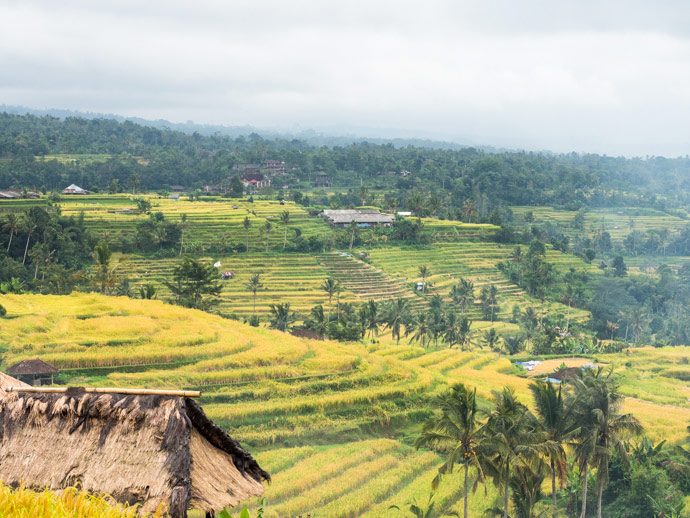
7 Top Must-Know Facts About Jatiluwih Rice Terraces

Jatiluwih Rice Terraces Bali
Jatiluwih Rice Terraces

What's special about some Balinese rice fields, or Jatiluwih Rice Terraces? Let's find out about their importance with the 7 top facts I have listed below.


1.  Rice is Bali's staple food and has very strong ties to the Balinese culture itself. 

For example, the rice's growth cycle largely sets the tone for a great deal of traditional Balinese life. The Balinese community sees rice as a present from God as well as a symbol of life. 

2.  For thousands of years, the Balinese people have been very active in both growing and cultivating the lovely rice terraces of Bali, and where three types of rice are grown, including white rice, red rice, and black rice. But white rice is by far the most common one and the red variety is much rarer and costs more.

3.  What makes the Balinese rice terraces quite unique is the Subak irrigation system. 

In fact, this system has even earned a UNESCO World Heritage Site status. Moreover, the Subak system is a fine and worthy manifestation of the Tri Hita Karana philosophy which is an integral part of the Balinese culture. This philosophy comprises three principals: harmony among people, harmony with nature, and harmony with God.

4.  The members of the Subak handle the water supply in order to ensure that there is more than plenty of water for rice and other important crops, which in turn contributes to the community's welfare. Actually, it's a highly efficient method for managing rice crops.

5.  The Subak system comprises weirs and canals by which water from springs flows through some of Bali's Water Temples, eventually reaching the rice fields. Because of the social and democratic factors of the Subak system, between 50 to 400 individuals represent different Balinese communities to jointly facilitate that the water indeed flows in Bali.

6.  The ancient system has largely helped shape Bali's landscape for 1000s of years. And that's why anywhere you go, you'll observe very healthy rice crops. 

7.  Today, the majority of the agricultural lands continue to be farmed in a sustainable manner by local communities, of course, with the support of the Subak system.

Most Famous Must-See Tourist Attractions in Indonesia


5 Best-Rated Must-See Attractions on the Lofoten Islands

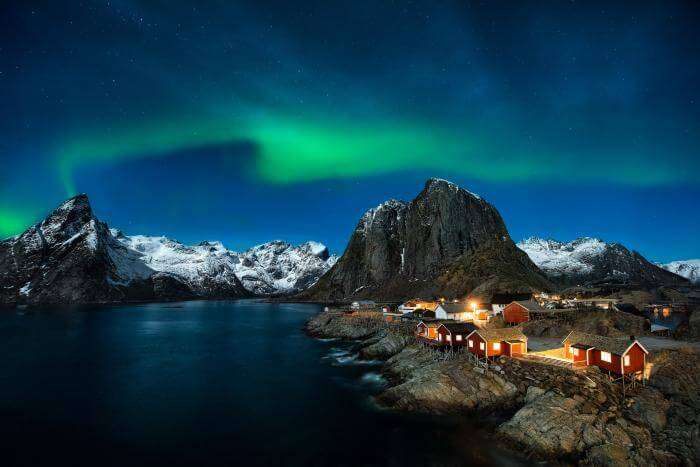
 Lofoten Islands

lofoten


Lofoten Islands are an archipelago, a fine collection of mountainous islands, strung together via bridges and pathways, and home to majestic scenery, white sandy beaches, fishing villages, and windy hiking trails. Surrounded by endless rocky islets, the islands are serrated by many inlets and fjords with soaring rock walls.

Tourism contributes largely to its economy. During summer, hidden fishing harbors and isolated but gorgeous beaches lure campers, kayakers, and tourists. In winter, skiing and watching the remarkable northern lights are popular pastimes to do here.

To find out which are the top places to visit, review this list of 5 best-rated must-see attractions on the Lofoten Islands.


1) Lofotr Viking Museum.  It's located on the island of Vestvagoy. The main attraction is a genuine reproduction of the chieftain's house. At a length of 272 feet, it's the biggest Viking-era structure on record, once standing on the site about 500 AD.

This superb Viking tour includes a fine brief film that tells about the chieftain's life and his family and fact-filled tours of the home and the many artifacts uncovered during archaeological digs.

Then, take a stroll below to the nearby lake to look at the well reproduced Viking ships such as the stunning longship. If coming in August, consider joining the Lofotr Viking Festival; you'll love the re-enactments and the opportunity to observe these Viking ships at sea. You'll also find a museum shop and a cafe situated close by.


2) Kabelvag.  Located on Austvagoy, the small fishing village is a fine site to learn why fishing in Lofoten is so vital. Begin at the Lofoten Museum and enjoy its exhibits of life during the 1800s such as the history of fishing on these islands, original fisherman's cabins, and a collection of boats.

Drop by the Lofoten Aquarium. It's a popular attraction that offers an opportunity to learn about the marine life in the area as well as fish and bigger sea animals from Lofoten.

Also, visit Vagan Church, the biggest wooden church situated north of Trondheim.


3) Rost Island.  Only accessible via a boat trip, the beautiful island, situated around 61 miles from the mainland, houses a big colony of seabirds and around 3 million puffins. On account of its distance and isolation, Rost Island's tall crags are ideal homes for several rare species like the lesser and greater storm fulmars and petrels.

All said, a whopping quarter of Norway's precious seabird population resides on the island, which is a fact to justify a visit here.

Be certain to stop by the Skomvaer Lighthouse. Constructed in 1887, it's regarded as Lofoten's last Atlantic outpost.


4) The Lofoten War Museum.  The museum displays the biggest collection of rare artifacts and uniforms from WWll. You'll notice unique historic photographs, proof of all 5 years that the war raged.

The entire sequence of snapshots narrate the war's story in an almost magnetic fashion, engaging its audience instantly and making them all feel like they are personally experiencing it. War veterans consider it to be one of the world's best war museums.


5) Reine.  It's a lovely fishing village situated on Moskenesoya. The village is a real favorite among most visitors, particularly those who love climbing mountains. The high elevations allow one to enjoy the incredible vista of the Moskenesstraumen, which is one of the world's strongest whirlpools.

Most Famous Must-See Tourist Attractions in Norway


How Muckross House Led to Killarney National Park's Creation

 Muckross HouseMuckross House


Situated 4 miles south of Killarney, in Kerry County, Muckross House together with its whole property turned into the first national park in Ireland, by 1932.

Even though the Killarney National Park's size has since then grown by 15,000 acres, the Muckross House, its gardens and farms are still great places where to start a park tour. In fact, the park's visitor center is conveniently situated at Muckross House.

It's quite easy to drive by automobile to Muckross House from Killarney, by taking N71, the chief Kenmare road. Or you could get there other ways, including a horse cart, bike, and walking trails.


History of Muckross House

Constructed in 1843, the 19th-century Victorian house has been transformed into a museum.

Henry Arthur Herbert, the first owner, sold the home and its 4,450 hectares to Lord Ardilaun in the year 1899. As a member belonging to the Arthur Guinness brewing family, he rented Muckross to rich fishermen and hunters.

In 1911, Ardilaun decided to sell the entire property to William Bowers Bourn, who in turn gave it to his daughter as a wedding gift after marrying Arthur Vincent.

But in 1929, the daughter, Maud, died suddenly from pneumonia. Three years later, the surviving husband and parents chose to donate Muckross House and its estate to the Irish government, as a memorial to Maud. It inevitably turned into Killarney National Park.


Muckross House Tour

Constructed from Portland stone, which was imported from England, the home's exterior is adorned with flower-laden pots. Hunting trophies and antlers decorate the entrance hall.

In addition to antlers from 3 red deer stags and 2 little sika deer, imported from Japan, you'll also see huge ten-foot-long Irish deer antlers. 


12 Must-Know Guggenheim Museum Facts

  Guggenheim Museum, Bilbao Guggenheim Museum at a Glance Guggenheim Museum has proven to be the most significant structure of Wright's ...