Naeroyfjord -- 5 Top-Rated Must-See Tourist Attractions

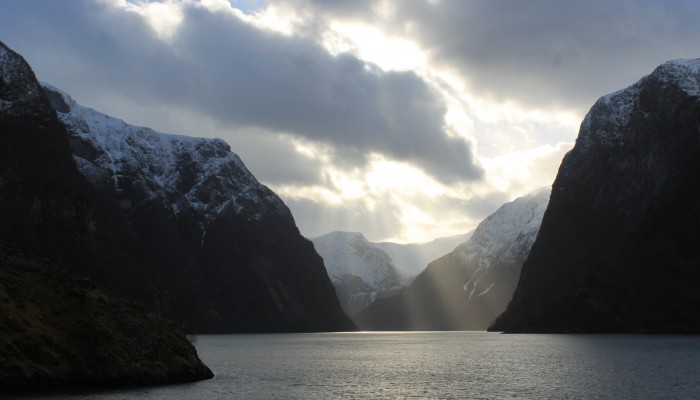
 NaeroyfjordImaggeo on Mondays: The world’s narrowest fjord


Nordfjord is located between Europe's biggest mainland glacier and wildest coast at the western cape in Norway, home to breathtaking valleys and mountains, dramatic coastline, and rolling farmland. Here's my list of top-rated attractions in Nordfjord.


1. The Flam Railway.  Is it the most beautiful train trip in the world? The Flam Railway will transport you from towering mountains at Myrdal station, and below to the lowest point of Aurlandsfjord and Flam station, all via amazing scenery. You could even try combining Flam Railway and a bicycle trip down the valley to enhance your experience.

2. Arthouse Fern.  It's an art studio managed by a female artist, who, inspired by fjord life, in 2020, started creating handcrafted jewellery as well as decorative objects--all from high quality resin.

Signature edition of Fern now range from see-through jewellery covered with nature-related items such as rocks, flowers, and shells. She can build unique pieces to fit all living spaces with her wide palette of colors.

3. Flam Church.  It's a wooden longchurch built in 1670 by the master builder Magne Essen, with a seating capacity of only 160. The church actually replaced an older one that was brought down in 1670, which was probably a stave church sitting about on the same location as the current church. Today Flam church is a "soka" church intended for the Flam "soka" in the Aurland parish.

4. Kjelfossen Waterfall.  It is one of Norway's highest waterfalls. The falls are situated close to Gudvangen village in Aurland Municipality. Boasting a towering height of 705 meters, it's recorded as the world's 18th tallest waterfall. The highest single drop is 198 meters.

5. Norwegian Glacier Museum.  It's overall expression of main exhibition design was created in 1995. It includes "The Educational Playground," where it displays mammoth family sculptures. Its exhibition now covers 13 languages. It also features the biggest calving event ever recorded on tape.

Most Famous Must-See Tourist Attractions in Norway


Sognefjord -- 15 Top Facts, Attractions, & How to Get There

 Sognefjord

Sognefjord – the Largest Fjord in Norway


Sognefjord is frequently referred to as "The King of fjords" for good reason. Learn why with my list of 15 top facts and attractions.


1. Sognefjord spans 127 miles inland, with a maximum depth of 1,308 meters and the surrounding mountains soar 2,000 meters in height. 

2. The Sognefjord's inner end is encompassed by Jostedalsbreen, the largest glacier in Europe, located on Norway's west coast. 

3. Glaciers are responsible for creating the fjords way back. If you wish to explore them, Bergen is a practical place to begin your trip.  

4. The western Norwegian fjords vary from others in that there also exists a landscape with several little settlements where you'll find people still living and where certain lands are grazed and cultivated.

5. At its broadest, it's nearly 3.7 miles across, and the cliff walls can reach 1,300 meters high, creating a stunning view.

6. Close to its mouth, the base rises rather abruptly to a sill around 100 meters below sea level.

7. You'll come across many lovely waterfalls along the fjord, several of which have been equipped to offer electricity for industries.

8. Sognefjord and its branches provide a few of Norway's most extraordinary scenery and make a significant tourist site.

9. As a branch of the Sognefjord, Naeroyjord is especially notable for its untainted natural and breathtaking scenery, with just 300 meters crossing at its narrowest point. It's now a UNESCO World Heritage Site.

10. The best and most popular manner to travel to Sognefjord is via boat, and such fjord cruises and tours for sightseeing are many which leave from Bergen.

11. Sognefjord's valley is only one of different valleys found in western Norway which predates the Quaternary glaciation

12. The ice reached the greatest thickness of almost 3000 meters in the Sognefjord area during the last glaciation. 

13. Bigger villages here range from Solvorn, Leirvik, Gaupne, Ytre Oppedal, Årdalstangen, Vadheim, Aurlandsvangen, to flam.

14. From Flam village, the Flam Railway often climbs 864 meters to arrive at Myrdal Station, covering a distance of 12 miles, which is supposed to be the world's steepest unsupported railway climb.  

15. Near the fjord's inner end, 3 of Norway's renowned stave churches still stand, which include Urnes, Borgund, and Kaupanger.   


Most Famous Must-See Tourist Attractions in Norway


Drottningholm Palace -- 12 Most Fascinating Facts -- Scarcely Known

 Drottningholm Palace

Photo from Flickr.com, copyright ~Frida*~ - Spottinghistory.com


Drottningholm Palace today offers many glimpses into life hundreds of years in the past. Learn an abundance of fascinating information by reading the list I've compiled below.


1. Drottningholm, translating to "Queen's islet," originated from Willem Boy's design of original renaissance structure. John lll built the stone palace in 1580 to house Queen Catherine Jagellon.

2. The palace's architectural design was influenced by a French prototype constructed by architect Nicodermus Tessin the Elder, which Queen Hedvig Eleonora commissioned. It was built on the model of French chateauxs.

3. The "castle" was purchased by the Queen Dowager Regent Hedwig Eleonora in 1661, one year after her Swedish queenship terminated, except it burned to the ground in that same year.

4. Both the palace and its grounds have undergone several renovations, modifications, and additions throughout the previous 400 years.

5. Nicodemus Tessin the Elder designed and constructed the palace church, and his son completed it in 1746.

6. The palace earned its UNESCO World Heritage Site status in 1991 on account of its well-preserved state.

7. The Swedish Military has guarded the palace in the same manner as Stockholm Palace, thus enjoying the same level of importance in the government's eyes. 

8. The Swedish royal family calls Drottningholm Palace home.

9. Although certain rooms in the palace's southern wing are reserved to serve as the royal family's permanent residence, the general public can now tour the remainder of the palace and grounds, year-round.

10. The palace comprises around 220 rooms, but only 20 are currently used by the royal family.

11. The park areas and gardens which surround the palace and its structures lure visitors as top attractions during the year. 

12. The gardens were added in phases since the palace was built, which explains the varying styles of gardens and parks seen today.


Most Famous Must-See Tourist Attractions in Sweden


Vasa Ship -- Why Did the Most High-Tech Ship Sink?

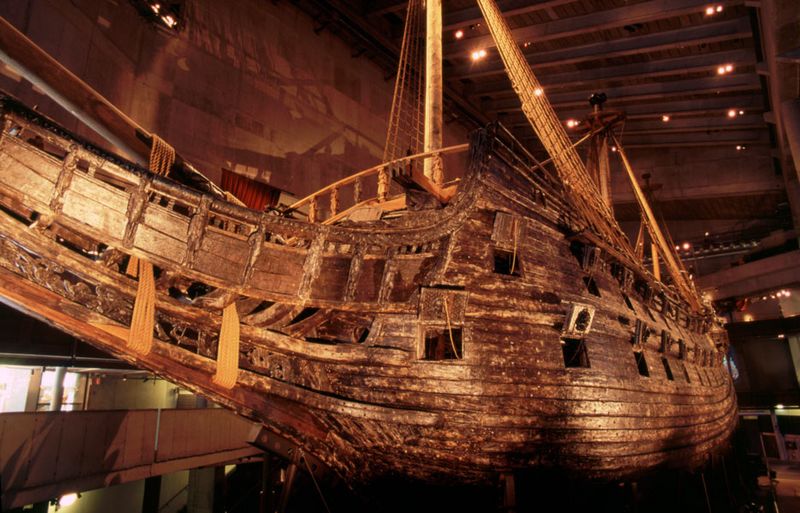
 Vasa ShipThe Wasa from the Bow


Vasa Ship had the misfortune of capsizing and then sinking in 1628 after sailing only 1300 meters into the ocean; a second gust of wind struck its huge white sails and overturned the ship on its side. Water flooding in through the gun portals helped sink the ship in the shallow waters belonging to Stockholm harbor.

At the time, Vasa was the most technologically advanced warship before it set sail on its first voyage. How could Sweden's pride in its Navy possibly sink? Let's discover the root causes of this unforeseen event.


Loss and Competition

The Swedish Navy already underwent a whopping loss of 10 vessels during a terrible storm on September 20, 1625. Shortly, two small ships were ordered by King Gustav ll Adolf to be built, quickly.

He then gave the order for Vasa's construction to begin in early 1626, but only as a small ship, and being completed 2.5 years later as a large ship, having undergone many modifications in requirements, because the king kept changing his mind about certain aspects of the ship's features like gun decks.

He was in a huge hurry to see Vasa built lightning fast, as though competing with Denmark's latest ship-building projects; he learned that a big vessel sporting 2 gun decks was being built in Denmark. Naturally, the king could not be outshone and had to take serious measures.


Overarmed and Lavish Ornamentation

The number and sorts of armaments for Vasa to carry was revised repeatedly. The king often gets accused of seemingly meddling in the ship's original design. Initially, Vasa's 111-foot version was to carry only 32, 24-pound guns. But this number increased and kept increasing until it arrived finally at record-breaking 64 brass cannons.  

Vasa was beautifully decorated, covered in wooden carvings. There is a universally agreed belief that the overemphasis on the vessel's firepower and lavish decoration and overlooking its seaworthiness and stability largely contributed to the ship's ultimate fate. 


95% of Vasa's Wood Survived

Approximately an unusual 95% of Vasa's wood is still intact by the time Sweden eventually raised it back in 1961. Despite the ship failing to work out brilliantly for King Gustav ll Adolf, it became a windfall for archaeologists.


Tourist Information

Today, Vasa's remains can be seen in Vasa Museum, located in Stockholm. The museum claims it's the sole surviving preserved 17-century vessel in the world.


Most Famous Must-See Tourist Attractions in Sweden


Stortorget -- Best-Rated Attractions -- Facts, History, & Tourist Info

 StortorgetFile:Stortorget Stockholm 2016 01.jpg


Malmö’s main square, known as Stortorget, is a fine widening space precisely at the heart of the city. A meeting site for centuries, Stortorget continues to be a significant public space, bordered by shops, hotels, and bars.

The old square was conceived way back in the mid 1500s and laid out in that time period, causing a big change in the city’s overall appearance. Medieval structures were removed to pave the way for the few landmarks which adorn the square today.

The most beautiful of these buildings happens to be Rådhuset, Malmö’s town hall, standing on the square’s eastern side. Despite being constructed in 1546, its present façade, sporting a colorful Dutch Renaissance style, came about in the 1860s.

The 2nd most-photographed structure on Stortorget is perhaps Apoteket Lejonet, sitting in the square’s southeast corner. Going back from the 1890s, it’s one of Sweden's best-preserved 19th-Century pharmacies.

It’s worth approaching the pharmacy's central entrance, where a gilded lion-fashioned sculpture watches. Enter and observe the elaborate gothic interiors: they’re adorned with wrought iron, oak and walnut cabinets, and stained glass. The store still operates as a pharmacy now and, although the ground floor is filled with modern potions and lotions, the top level is in sharp contrast with the rest of the shop, having been left to appear as it would have about the era of the store's construction.

Near the heart of Stortorget you'll find a bronze statue of King Karl X Gustav on horseback. This Swedish ruler, who reigned in the mid-17th Century, took on a crucial role in shaping Malmö’s history. 

The king coerced the Danes, who have long been controlling Malmö, to eventually return the city to the Swedes. 

Visiting

Stortorget is approximately 250 meters south of the Central Station. Cross Mälarbron, go south along Hamngatan and you’ll come across the square before you.

Stortorget
Malmö


Most Famous Must-See Tourist Attractions in Sweden


Jungfraujoch -- 8 Top Must-See Tourist Attractions in Jungfrau

 Jungfraujoch, Jungfrau


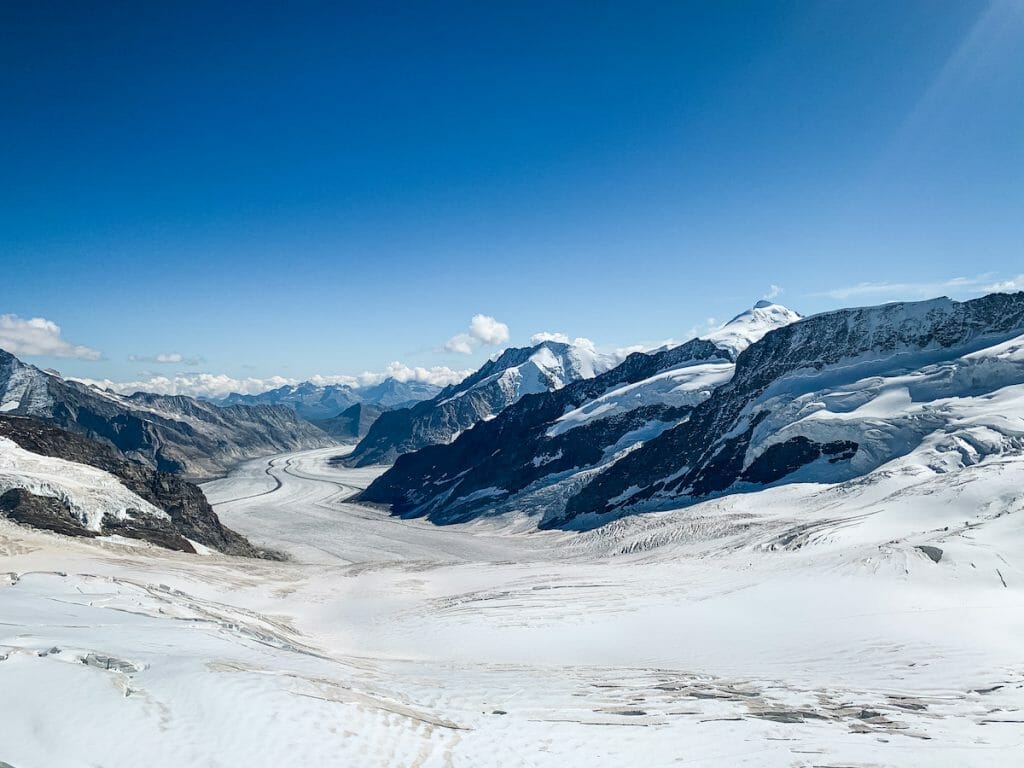
Junfraujoch which means "maiden saddle" in German, is a saddle linking 2 notable 4000ers belonging to the Bernese Alps, and functions like their official viewing point because of its incredible height. Either a cogwheel train or a cable vehicle could transport you there.

Jungfrau is filled with several natural attractions like mountains with extremely high wall points. In this region you'll discover more than enough to occupy you in pursuing amazing attractions. You'll be awed instantly and at a total loss where to begin, once you get here. 

But to ensure your trip here is nothing but memorable, continue reading my list of 8 top must-see tourist attractions in Jungfrau.  


1) Jungfraujoch Railway Station.  It's Europe's highest train station at an elevated peak of 3454 meters beyond sea level. It's train ride offers a pleasant journey beginning from the lowest possible point and stops at its station.

Passengers will see delightful tunnels and some restaurants. The estimated travel height is 3454 meters.


2) Hiking Monchsjoch Hut.  Without doubt, hiking is the number one reason for coming here. The adventurers' "ultimate destination" is 3885 meters which begins from Monchsjoch Hut. It can consume many hours to reach this towering height. So, prepare yourself both mentally and physically.


3) Jungfraujoch Sphinx Observatory.  Situated above Switzerland's Jungfraujoch, it's an international research station and one of the world's highest observatories.

You could visit the open viewing deck, or Sphinx observation deck to get a far better look and what else you may want to explore. 


4) Snow Fun Park.  Now you can revive the old but familiar summer feeling in the snow again by enjoying winter sports. Visitors could easily rent gear and equipment and indulge in a broad range of activities such as snow tubing, skiing, and snow boarding.


5) Alpine Sensations.  It's a display showing a 360-degree audiovisual panorama, plus a 250-meter long hall, loaded with panasonic projectors.

You'll enjoy seeing Jungfraubahn's beginnings, along with bright images from the period of the tourism dreamers.  


6) Ice Palace.  Guides in 1930s created the Ice Palace with the idea of a frosty world in mind, at a temperature of minus three degree Celsius.

Here, you'll come across neat and interesting objects such as a bear and an eagle and much more, all frozen. 


7) Trummelbach Falls.  Nearly concealed inside the Schwarze Monch, the falls race below in 5 rushing cascades which twirl via a corkscrew-formed vertical gorge etched out by the meltwaters from massive ice walls.

Elevators now transport visitors inside the mountain where you'll find walkways for observing individual waterfalls.


8) Grindelwald.  As if out of a movie filmed in raw nature, Grindelwald sits at the base of the stunning ledges of the Elger's sheer north face, with nearby valley's characteristic landmark--the 3,104 meter Mettenberg as well as the 3,701-meter Wetterhorn.

In the village, visit its little museum and learn something about Alpine daily life, cheese-making, and history of mountaineering and skiing in the valley. Each year it hosts the intriguing World Snow Festival.


Most Famous Must-See Tourist Attractions in Switzerland


Kilmainham Gaol -- 5 Fascinating Facts -- Horrors, Executions, Shocking Conditions

Kilmainham Gaol, Ireland


Kilmainham Gaol should be on every serious tourist's to-do list. Don't worry about what there is to do while in Dublin, where you'll find many worthy historical places and sites that tell a moving story such as Kilmainham Gaol. Here are definitely the 5 top facts you must learn about the infamous former prison.


1. What is Kilmainham Gaol?

By just having read history textbooks back in college, you still may not know what Kilmainham Gaol is only from reading its name. But if you love history, then you already surmised correctly that it's a prison, or more precisely, a medieval prison. Now, it serves a very different purpose as a museum to relate the horrors that once occurred here to tourists.


2. Short History Lesson

It was constructed in 1796, managed by Dublin's Grand Jury. The new prison was built in 1796 to replace the last one and referred to as the new Gaol as a distinction from the old one. Many Irish revolutionaries experienced their death here at the British rulers' orders.

Infamous for its awfully filthy and revolting living conditions, it housed many criminals, men, women, and even children as young as 10-years-old. Gaol did not distinguish inmates based on gender and often men and women were imprisoned together in a frequently overpacked room.


3. Men received better treatment than women

It was quite sad the reigning discrimination. Both male and female inmates were not just kept locked together, but the females were treated far worse than their male counterparts. For example, the bedding: while male prisoners slept often on metallic cots, female inmates slept either on the cold hard floors or on straw. This double standard and awful debasing treatment is astonishing.


4. Usually, prisoners were hung outside

Public executions took place only a few centuries ago. It provided some kind of sadistic pleasure to a certain crowd of people; in addition, they were means to ensure that everyone in jail followed the rules and instilled a healthy dose of fear in them.

From beheadings to the guillotine, public executions were very popular and it was the same in Dublin between the 17th and 18th century. Prisoners receiving a death sentence were hung in shame in front of an audience. But after some time, when the need for the hang man's noose diminished, a small hanging noose materialized, getting incorporated into the prison's design and blueprint.


5. Kilmainham Gaol's restoration

The prison's operations stopped in 1924 because the then government disliked the image it portrayed which wasn't the message its government wanted to transmit.

After a while, the structure was abandoned in disrepair till there was a decision made to restore it in 1958. Eventually, after the historical society lobbied a lot, funds finally came for its renovation. Following years of restoration work by paid helpers and volunteers, Kilmainham Gaol opened at last to the general public in 1971. Since then, it has turned into a museum for visitors to tour and perhaps even "relive" a one-thousandth part of what former prisoners underwent.

Most Famous Must-See Tourist Attractions in Ireland


12 Must-Know Guggenheim Museum Facts

  Guggenheim Museum, Bilbao Guggenheim Museum at a Glance Guggenheim Museum has proven to be the most significant structure of Wright's ...