9 Great Reasons Why to Visit Fraser Island

 Fraser Island

File:Indian Head view on Fraser Island (May 2016).jpg


Fraser Island at a Glance


Fraser Island lies along the southeastern coast in the Wide Bay--Burnett region, Queensland, Australia. Less than 200 actually reside here and half of them were itinerant residents living temporarily on the island.

Each year Fraser Island draws around 400,000 visitors. The island has it all. It's where adventure feels as rejuvenating as it does thrilling, with no WiFi, no sealed roads. Only nature and a ton of it.

Roam here and you'll be strolling into the land of the Butchalla people, who boast about 20,000 years of history on K'gari. 

That's only the start of why you should visit Fraser Island.


9 Great Reasons Why to Visit Fraser Island


1.  It's has World Heritage status

Do not take my word for it: Fraser Island's importance runs so deep that UNESCO has listed it as a World Heritage Site. The island is one of the world's most unique islands. This is largely due to its thriving beauty and wildlife and the only location on Earth where rainforest grows on sand dunes; where there are more than half of the world's perched freshwater dune lakes, and huge dunes which tower higher than the Sydney House. 


2.  It's the Earth's biggest sand island

Extending 123 kilometers in length and 22 kilometers wide off the Fraser Coast, Fraser Island measures as the largest sand island in the world. A bit further south, off the coast of Brisbane, Minjerribah and Moorgumpin clock in as two and three.


3.  Taking the off-road "path" is part of the adventure

Wild and rugged, Fraser Island is best experienced by 4WD along its beach roads and sandy inland tracks. In addition, it's one of Australia's best places to enjoy a beach camping trip. So work on your beach driving skills prior to coming here or learn from the pros when you're here.

If you do not have a 4DW, don't worry. There are many tours that will show you the natural attractions in day trips and multi-day adventures.


4.  There are countless places to take a dip

This may be an island, but the top swimming locations are situated off the beach because of the strong surf and currents which regularly strike the shores of the island.

Sink into the natural Jacuzzi which is Champagne Pools, absorb a little serenity floating down Eli Creek, or spend a couple of hours basking in the glittering surroundings of Lake McKenzie, which is only one of the hundreds of freshwater lakes located on the island.

With water this appealing, you'll dream up any excuse to jump in.


5.  It's a hiker's heaven

Although 4WD is the most favorite way to travel around here, hikers shall be more than pleased after putting on their boots. There are trails of all lengths, from short trails to day hikes leading through the ancient Valley of the Giants, Lake Wabby, Central Station and more. Or experience it all while taking the 90 kilometer Great Walk.


6.  It's the location for adventure

If you wish to pursue thrills and natural wonders, Fraser Island is your destination. From Jet Ski safaris and sailing trips to scenic flights and kayaking the island's wild side, there are many unique ways to explore every niche and corner.


7.  You'll spot a dingo

Although wildlife thrives on Fraser Island, the dingo is one of its most renowned residents. As cute as they appear, it's a very good idea to maintain your distance and they're protected here. 


8.  You'll see shipwrecks on the sand

No dive gear is necessary to admire this shipwreck: the S.S. Maheno beached in the island since 1935, and its rusting wreck makes for a fine stop along the sandy route.


9.  Visit the island during winter to watch whales play

From the months August to October, you could observe humpback whales nurture their playful calves in the island's protective waters. Although Hervey Bay on the mainland offers the biggest share of whale watching tours, you could yet board a wildlife cruise from the island. You can frequently spot blowholes and breaches from shore, too.
Fired Travel Agent Tells the Public the Airline's Dirty Secrets, How to Turn Them Around In Your Favor, Including How to Fly Practically Free!


9 Amazing Reasons to Visit Mauna Kea

 Mauna Kea

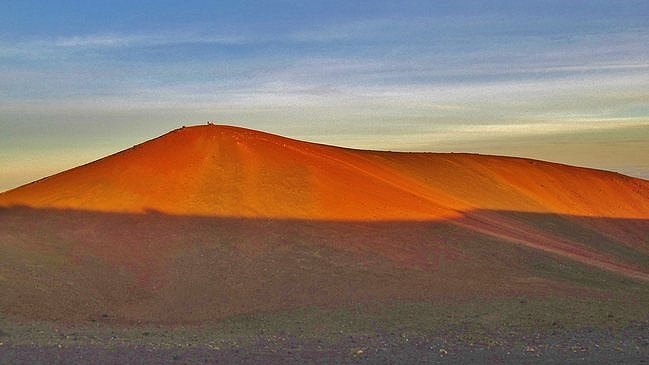
Summit of Mauna Kea


Mauna Kea at a Glance

Mauna Kea today is a dormant volcano that sits on the island of Hawaii. Peaking at 4,207.3 meters over sea level, it's the tallest point in Hawaii and the earth's second-tallest peak of an island. The peak is around 38 meters higher than Mauna Loa, which is a more massive nearby neighbor.

Situated in the north-central area of Hawaii's Big Island, Mauna Kea truly delivers an adventure of a lifetime. It's a majestic place full of contradictions but famous for its ocean-scape, fauna, and flora. This frequent snow-shrouded dormant volcano extends almost 14,000 feet into the sky, and the land on it, scrubby alpine meadows which give way to astonishing moon-rock landscapes, cannot appear more different than a marine paradise. However, this destination offers far more than just a stroll along the beach; it's where tradition and ancient culture meet modern research among one of the greatest backdrops imaginable.

Here's my list of amazing reasons why you ought to think of visiting Mauna Kea while going on the next Big Island exploration.


9 Amazing Reasons to Visit Mauna Kea


1.  It's One of the Most Sacred Places in Hawaii

Although Mauna Kea is spectacular by itself, towering nearly 14,000 feet into the air, this is a treasured spot for Native Hawaiians. In their creation traditions, the Sky Father and Earth Mother created the islands together. Mauna Kea was narrated as their first-born mountain child and is thought of as the center of the Big Island. Goddesses and gods were worshipped here, and evidence can yet be observed in the wooden and stone altars dotted along the mountainside.

Mauna Kea in addition serves as a burial ground, or cemetery, for notable high-ranking people such as chiefs and priests, and today religious ceremonies continue on the calm volcano.

Although not walled, bear in mind that Mauna Kea is in fact a sanctuary, and really one of Hawaii's most sacred spaces. So, take nothing, walk lightly, and, most of all, treat this area with the deepest respect that it deserves.


2.  You'll Be Walking in the Clouds

While making the 6-mile drive up to its visitor information center, you'll see the air grow clearly thinner. You're now at around 9,200 feet; it's highly recommended to pull over here for the sake of acclimating prior to continuing to the summit. There's a ton of information here educating you about Mauna Kea's scientific and cultural importance. Kind rangers and guides are nearby ready to answer your questions. You'll find souvenirs and snacks for sale at the center's shop.

As you proceed further up toward the summit, most likely you'll experience the similar odd, exhilarating sensation that many have had: it was astonishing to be going up the front of this natural wonder, and then realizing what you're firstly assumed was just fog was really feathery, floating clouds!


3.  See the Marvelous Transformation from Sand to Snow

It's a jaw-dropping experience that you could have breakfast on one of the beaches in the morning, enjoy the surf and sun, and in only many hours, you could find yourself in the center of a thoroughly different landscape, 1000s of feet over sea level, covered with fresh snow! As it diminishes during the summer months, it was completely prevalent in the wintertime. The experience from sand to snow rather dramatically fast is one of the high points which makes Mauna Kea so unique and significant. 


4.  The Hike is Unbelievable

Be well-informed: you must be tough and in fair physical shape to tackle Mauna Kia's hiking trail, that begins close to the Visitor Information Center. Also, know this hike is intended for seasoned hikers, for the back-woods-trail is 12 miles, including a 4,600-foot slow climb to the top. Take on either the 8, 9, or 10-hour challenge and you'll enjoy stunning landscapes, a fine view of Lake Waiau, and even a lifetime of boasting rights. However, be fully prepared: take a lot of water, sunscreen, and even fuel.

Bear in mind, it's very rude and offensive to Native Hawaiians to climb the whole way up to the peak of the summit. 


5.  Watching the Observatories

Several notable people in the scientific world regard Mauna Kea to be the best astronomical research site in the world. The mountain's high altitude together with peaceful, dry air and black skies, makes Mauna Kea the ideal spot to observe space clearly from Earth. From 1960s, a total of 13 observatories have been constructed here. Situated close to the summit, they add to that otherworldly feeling of Mauna Kea. 


6.  The White-Knuckle Drive

They say coming here is half the thrill. There's no manner of escaping this one: it's intense. But only consider doing it if the weather is especially fair and the path up there is ice and snow free. The partly paved road has a challenging steep grade, with many sudden turns, zero guardrails, and creepy traffic signs. That told, the drive up there and down, makes the summit for a memory you'll never forget. Ensure for safety's sake to take it slow driving up, and down, and always keep your eyes looking directly ahead.


7.  You'll Observe One of the Greatest Sunsets Anywhere

If you've arrived at the summit and the time is right, stay a bit longer. Way up there, you'll imagine as though you're seeing the sun set from the height of the world. Locals claim it's a great way to catch a memorable sky scene filled with blazing color.


8.  Gaze at the Sky at Night

Once it becomes dark, the show isn't over at Mauna Kea. Try to spend a little more time close to the Visitor's Information Center to catch more than a peek of an unbelievable night sky. Most probably you've never observed the stars exactly like this. For example, constellations are plainly observable, and telescopes set up by volunteers shall aid you see far more clearly. Just invest a few minutes gazing up at the glowing night sky and you'll understand why Mauna Kea is so important, scientifically as spiritually.


9.  Mauna Kea Beach

Located behind the Mauna Kea Hotel, the white sandy beach is perfect for several beach activities from swimming, boogie boarding, beach walking, to name a few. It's not overcrowded, so there's plenty of room.

Now, you can carve out some time to relax under the warm sun and enjoy the peaceful waters. Snorkel out and observe colorful tropical fish. If the waves are high enough, this sheltered area is an ideal site to brush up on your surfing skills.


Fired Travel Agent Tells the Public the Airline's Dirty Secrets, How to Turn Them Around In Your Favor, Including How to Fly Practically Free!


9 Top Exciting Things to Do in Haleakala National Park

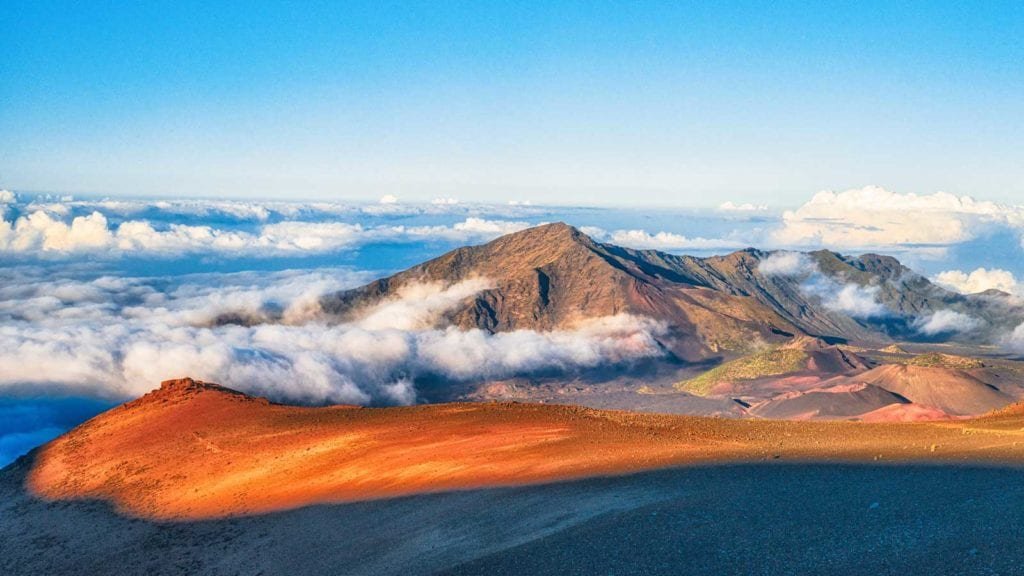
 Haleakala National Park


Haleakala National Park at a Glance

Haleakala National Park, located on the Maui Island, in Hawaii, is home to the endangered Hawaiian geese and dormant Haleakala Volcano. The steep crater overlooks the Kalahaku and Leleiki..Road offers vistas across the West Maui Mountains. Find waterfalls and freshwater pools amid bamboo forest. Admire cinder cones and lava flows while taking rugged trails in the Summit District.


9 Top Exciting Things to Do in Haleakala National Park


1.  Observe the Sunrise/Sunset

This happens to be a most popular activity with many visitors. Why? Imagine seeing the sun put on a show of dancing over the landscape with vibrant colors.

Though most people choose to watch the sunrise, the sunset is quite as nice, if not nicer.

Also, you must decide whether to go independent to the summit or book a tour. If you opt to come without a tour, arm yourself with the Haleakala sunrise and sunset times. The "sun show" won't disappoint.


2.  Hiking

Haleakala's summit trails offer from easy scenic walks to more adventurous hikes for hardcore explorers. For example, Sliding Sands Trail is a wonderful hike, and though not intended for inexperienced hikers, the vistas are stunning and unmatched.

If you are out for beautiful scenery but do not want such a physically demanding hike, try the Supply Trail or Hosmer Grove Loop Trail. You'll love green vegetation, pine, eucalyptus, and cedar trees.
 
Whichever trail you take, bear in mind that this park is a landscape constantly changing and conditions could be unpredictable. Thus, do not forget to take snacks, water, and other hiking necessities. Put on warm clothes, bring sunscreen, a hiking pole, and always proceed well rested. 


3.  Skywatching

Covering from sunset, sunrise, stargazing, and more in between, skywatching during your trip on the Haleakala summit is the ideal activity for all visitors.

On your climb up the summit, halt at any of the several overlooks throughout the path to the peak, walk a little away from the crowded places, and admire as the clouds shape before you. In several locations, the visual horizon is as many as 115 miles out to sea. 

Do not worry about cloudy conditions., for even cloudy skies offer a ton of amazing vistas from moonbows, rainbows to halos around one's own shadow.  

If you are going to the summit during the night, know the sky conditions are spectacular for identifying planets, stars, and moons. Get a star map at the Haleakala Visitor Center and map out the perfect nightly sky trip.


4.  Cycling

Only being present in Haleakala is a real treat, but is your idea of a thrill more like riding down Haleakala on a bicycle? You can either rent a bike or just book a Haleakala bicycle tour to descend the 21 switchbacks on the western slopes of the mountain. Enjoy the thrills, extraordinary scenery, elevation shift, and the close and personal manner to appreciate the House of the Sun. 


5.  Horseback Riding

Cowboys and Hawaii might not appear in your mind, but any trip to Upcountry Maui says you're in the landscape of the Paniolo, or Hawaiian cowboy. Even if you might not be an experienced rider, you'll definitely love your majestic host carrying you through the winding trails to take in incredible sights of the rolling hills, coastline, and the pretty fauna and flora that surround you. Horseback riding allows you to breathe the fresh air, create lifetime memories, and make friends with a four-legged animal.


6.  Ziplining

Now you can see the sights as you soar above the treetops. A Haleakala Zipline Tour is just unrivaled in adrenaline and pure pleasure. Best of all, ziplining Haleakala is a fantastic activity for the whole family. 

And if you consider zipping is exciting, mix things up a little with a Haleakala Bike n' Zip Combo Tour which will have you observing the famed Haleakala sunrise, thundering down the mountain on a bicycle, and then zipping like a real pro. 

Whether you're an experienced zipper or a beginner, nothing's better than exploring the lovely lands of Upcountry Maui on a thrilling zipline adventure.


7.  Touring by Helicopter

The valley Isle of Maui keeps a number of her gems somewhat concealed. With numerous distant areas, moonlike landscapes, deep valleys, lava flows, and much more, observing all this during a single tour is humanly impossible. 

Unless you board a helicopter via the Hana Haleakala Helicopter Tour. Just sit back and enjoy a great view of many sights from the towering cinder cones to the lava flowing, lush Hana rainforest, coastline waterfalls to taro fields. A helicopter tour of the Kipahulu region and Haleakala summit is a fun adventure you won't forget soon.


8.  Camping

Haleakala is the ideal place to camp as well as explore as you wish. While in the summit area, hikers could enjoy 2 wilderness campsites: Paliku, situated around 9.3 miles along Sliding Sands Trail; and Holua, situated around 3.7 miles down the Halemauu Trail. Bear in mind that weather may change very rapidly at these higher altitudes, so be fully prepared. 

If you are not so physically inclined, go to one of the park's two drive-up campsites: Hosmer Grove Campground, located below the Haleakala cloud belt within the summit area; Kipahulu Campground, situated along the back side of the park. 

Whether you decide to drive in or hike in, camping in Haleakala is a really special experience.


9.  Spotting Endangered Species

A high 80% of Haleakala National Park is federally designated as wilderness and houses not only some of Hawaii's but the rarest animals and plants in the world. In actuality, the park is home to more endangered species than any other national park.

Do not miss seeing the Hawaii silverswords, which is a truly unique plant that could take up to fifty years to bloom only once and then dies. You might also catch sight of the state bird, the nene, or Hawaiian goose. Using a Maui Haleakala Tour is a great way to find these rare species and learn about their unique qualities. Only remember: Never stray from marked trails, never feed wildlife, and respectfully treat all Haleakala's residents. 


Fired Travel Agent Tells the Public the Airline's Dirty Secrets, How to Turn Them Around In Your Favor, Including How to Fly Practically Free!


6 Top Popular Activities to Do Near Hanauma Bay

 Hanauma Bay Nature Preserve

Aerial view of Hanauma Bay in Hawaii.


Hanauma Bay at a Glance

Hanauma is a marine embayment created inside a tuff circle and lies along the southeast coast of Oahu in East Honolulu. It's one of Hawaii's most popular destinations for tourists.


6 Top Popular Activities to Do Near Hanauma Bay


1.  Hike

Fitness freaks love the Koko Head Hike. There, you'll be climbing up some stairs transformed from a former railway line, which makes it somewhat challenging!

The hiking trail lies only across the street from Hanauma Bay. It can be ideal to begin this hike in the morning, and next recover with either swimming or snorkeling. If you're using the bus, know that you can always rent snorkel gear at Hanauma Bay, and carry your beach stuff in a backpack.


2.  Whale Watching

The Makapuu Lighthouse Trail is another hiking trail close to Hanauma Bay. If you're visiting Oahu during whale season, consider whale watching. It's a coastal trail where whale sightings are quite common. Although it may not be whale season, it's still worth a visit due to those coastal vistas.

This is a mere 10-minute drive from Hanauma Bay. The bus stop that you come off at for this trail happens also to be just a 10-minute bus ride. From the bus stop, it's around a 15-minute stroll to the beginning of the trail.


3.  Beach

If you're renting a boogie board on Oahu, know that Makapuu Beach can be a perfect spot to surf some great waves.

This is between 10 to 15 minute drive from Hanauma Bay. The bus travel time is similar, except considering the bus wait time. When you get off the bus, it's around a 5-minute walk across the street to reach the beach.

This beach lies across the street from Sea Life Park, which is yet another thing you might consider doing later.


4.  Sea Life Park

Sea Life Park is a marine mammal park, bird sanctuary and aquarium located in Waimanalo, north of Hanauma Bay. Here, the park offers the unique opportunity to interact with exotic sea animals.


5.  Hanauma Bay Snorkeling

If you're seriously thinking of snorkeling at Hanauma Bay, here is a must-have list of items to pack for this adventure: a standard snorkel set; a special case for taking underwater pictures; a special pouch for taking your valuables while underwater; UV protection shirts to wear so the strong tropical sun rays won't fry you in the water; beach shoes to protect your feet from sharp rocks concealed under the sand; an open-air beach bag to begin the drying of your beach gear after completing your snorkeling adventure.


6.  Eateries Near Hanauma Bay

The Koko Marina Center is located only down the road from Hanauma Bay. So, chances are you'll be passing by it on your route to Hanauma Bay if you're driving from Waikiki.

It's around a 20-minute walk, and it's a 5-minute drive. Or you can always wait for the bus to get you down the road.

There are a couple of different restaurants at this shopping center.

If you want a sample of Hawaiian food, consider a poke bowl at the Paina Cafe.


Fired Travel Agent Tells the Public the Airline's Dirty Secrets, How to Turn Them Around In Your Favor, Including How to Fly Practically Free!


5 Great Tips to Improve Your Visit to Lanikai Beach

 Lanikai Beach

location-photo


Best Oahu Beach

Have an idea in your mind of what the flawless Hawaiian beach is like? Lanikai Beach completely satisfies that picture. It's situated in the community of Lanikai in Kailua, which lies on the east side of Oahu.

Lanikai Beach at a Glance

Escape to Lanikai, one of Hawaii's most beautiful beaches, which continues to rank among the world's best beaches. The island of Lanikai is famous for the stunning views and gorgeous scenery such as:

  • Remarkable panoramic sights from the Lanikai Pillbox.
  • The moonrise and sunrise, observed from this beach, make it a favorite place for viewing.
  • From this great angle, we could view the spectacular offshore islands called locally "the Mokes."
Despite the natural beauty, the construction of seawalls has been the cause of the white-sandy beach's erosion, reducing it to half-mile in length. But in spite of the smaller size, many still revere Lanikai Beach's loveliness

The Mokulua Islands, lying only off the coast of Lanikai Beach, are an amazing tropical paradise sporting azure blue waters and white sand that make you believe that you're on that perfect postcard!. The majority of visitors arrive at the islands via kayak, which can be rented from Kailua Beach.

As a favorite location for locals and a family-friendly high-ranking destination, this beach offers calm waters that enhance the entire experience. While here, enjoy activities from snorkeling at bay to kayaking to additional paddle sports.


5 Great Tips to Improve Your Visit to Lanikai Beach

Use the following tips to have a truly enjoyable experience.

1.  Public access:  You can only access the beach through public access pathways, which start in between the residential houses. Proceed on the pathway and be on the lookout for the pillar bearing the sign "Lanikai," standing close to the beach's entrance.

2.  Parking:  Several visitors struggle to locate parking over the weekend or during the vacation season, but do not park illegally, for fines can be excessive.  

3.  Best times to come:  The best time to go to Lanikai Beach is during the week, for it's usually less crowded and quieter.

4.  No lifeguards:  Watch your children and yourself while at Lanikai Beach, for there's no lifeguard around.

5.  Stinging creatures:  Look out for stinging limu (seaweed) and the Portuguese Man-of-War (jellyfish), particularly from the months June to September. Consider wearing swimming shoes or even fins as they might help.


Lanikai Beach Amenities

Although Lanikai Beach lacks many amenities such as a public parking lot and on-duty lifeguards, Kailua Beach Park provides picnic tables, outdoor shower facilities, and restrooms.


Fired Travel Agent Tells the Public the Airline's Dirty Secrets, How to Turn Them Around In Your Favor, Including How to Fly Practically Free!


11 Best Tips to Improve Your Vacation at Waikiki Beach

 Waikiki Beach Info


Waikiki Beach Info

Location

Waikiki is located in Honolulu, the capital of Hawaii, the biggest city at 352,000 residents. Honolulu lies on the island of Oahu.

Activities

swimming, surfing, bodyboarding, outrigger canoeing

Amenities

lifeguards, picnic tables, rentals, eateries, restrooms, accommodations, showers


Waikiki Beach, one of the world's most famous beaches, receives over 4 million visitors each year. The beach provides stunning views of Leahi, or Diamond Head. The Duke Kahanamoku statue greets you as you arrive.

It's a great place in Hawaii to learn how to paddle a canoe or surf because of its small long-lasting wave break. There are surfing lessons given here.

Extending a two-mile stretch, Waikiki Beach really consists of a number of beaches like Fort DeRussy Beach to the west, Kuhio Beach, and Queen Surf Beach, home to calmer stretches on the Diamond Head side of Waikiki.

All above mentioned beaches in Waikiki are all little beaches interconnecting into one bigger beach. Realistically, you could enjoy many of these beaches in just one day if you wish.

Please read my list of 11 best tips for improving your vacation at Waikiki Beach. You won't be sorry!


11 Best Tips to Improve Your Vacation at Waikiki Beach


1.  Can strangers touch a Hawaiian green sea turtle?

Never! If you do, you risk going to prison or having a local shouting at you.

Actually, it's both a federal and state crime just to touch or annoy Hawaiian green sea turtles, for they are an endangered species and you could be fined and also go to jail. 

These creatures are regarded as a personal family god and so locals revere them. They are much more than only animals to islanders. So treat them with due respect and do not touch nor play with them.

2.  Purchase your floaties and snorkel set when you arrive

In Hawaii, you can buy from snorkel sets, floaties to towels around town. Reef booties are not absolutely necessary, but helpful as certain areas of the Waikiki Beach are filled with rocky or gretty sands as you enter the ocean.

Boogie board and surf board are available for rent at beaches nearby.

3.  Buy or rent beach chairs

If you are thinking of renting a chair on the beach, know that such a chair rental isn't cheap through your hotel.

Although beachfront hotels offer lounge beach chairs in great spots in front of hotels, their rental fee may be about $60 per day. Or consider buying a cheap fold out chair at your hotel store or local shops like ABC Stores and Longs Drugs. 

4.  Find parking in Waikiki

Locating parking in Waikiki could sometimes be extremely difficult, for hotel parking is not cheap. Locals also want to know the cheapest places to park in Waikiki. If you do not want the pain of driving around, just use an Uber or Lyft.

Some good places to park in Waikiki are the following:

  • Street parking:  Ala Wai Canal (But not weekdays 8:30 AM to 11:30 AM), Kapiolani Park, Ala Moana Beach Park
  • Metered parking:  Honolulu Zoo, Kapiolani Park
  • Nearly free:  Ross for Less parking lot (1 hour free with a purchase)
  • Paid (below $35/day):  Sheraton Waikiki Hotel Garage, Fort DeRussy Garage, Ala Wai Boat Harbor (metered)

5.  Make it a point to read beach signs, always

There are warning signs for such things as strong undertow, strong currents, high tides, and man-o-war warnings. Locals pay close attention to them, and you should as well. They are warnings since the chance of injuries or accidents is rather high.

6.  Man-o-war warnings

Portuguese man-o-war warnings are the beach's most unpleasant signs. They resemble jellyfishes and are clear blue bubble with stingers. Right after a storm they could be seen washed ashore on the sands or floating on the surface of the water. Although it's not a deadly sea animal, the sting is painful and might last for hours. There are 2 methods to treat the pain: urinate on the affected stung area and a meat tenderizer. If you observe this sign, it's a good idea just to avoid that beach.

7.  Only swim if there's a lifeguard on duty

Although Waikiki Beach is a rather safe beach with calm waters and mild, little undertow currents, always ensure that you swim where you see an on-duty lifeguard.

8.  Sun protection

Because of global warming, the Hawaiian sun is even hotter than ever. This is no joke, for even locals feel the difference in heat, which is further proven by the fast tan you get by only hanging your right arm out of the car window while sitting in traffic. 

So, it's not all odd to be driving around Waikiki and spot a lobster-red tourist walking slowly and unable to swing their arms. A burn isn't a tan! Many Waikiki stores sell sunscreen. Be sure to purchase it and use it. Even cloudy days and shaded areas require some sunscreen to protect you from harmful UV rays.

Reapply every 2 hours, particularly if you are sweating or swimming. If you happen to suffer a burn, ABC stores provide post burn lotions to soothe and add moisture back into sunburn skin.

9.  Reef safe sunscreen only permitted

In January 2021, the state of Hawaii banned certain sunscreens which harm the ocean, coral, and marine life.  Here is a list of reef safe sunscreens:

  • Manda Organic SPF 50 Sun Paste
  • Kokua Sun Care Hawaiian SPF 50 Natural Zinc Sunscreen
  • Thinksport SPF 30 Face & Body Mineral Sunscreen Stick
  • Raw Love SPF 35 All-natural Mineral Sunscreen Paste

10.  Keep your valuables dry

Buy a waterproof Mobile Phone bag to keep your cellular phone and money dry. These waterproof pouches let you dive with your camera phone. The majority permit one to submerge it in shallow waters. But it's not intended for deep dives. Test yours initially by putting a tissue in it and drowning it in your hotel sink. If the tissue is wet after you have sealed the pouch and put it in the sink's water, there's obviously a hole.

11.  Don't litter

Wherever you go, be respectful of all beaches and do your part to keep it clean. Don't litter and remove all the trash you bring with you. As beautiful as the beaches are in Waikiki, they could have a ton of micro plastics because of the careless and irresponsible visitors. Debris in the beaches and oceans hurts and kills wild and marine life. So, if you find litter, please remove it and throw it in the closest trash receptacle. Hawaii's beach parks are loaded with many trash cans.


Fired Travel Agent Tells the Public the Airline's Dirty Secrets, How to Turn Them Around In Your Favor, Including How to Fly Practically Free!


10 Top Facts to Unravel the Mystery of Stonehenge

 Stonehenge, England

Stonehenge


10 Top Facts to Unravel the Mystery of Stonehenge

1. How old is Stonehenge?

The site has undergone varying changes and never started as a circle of stones. While the round earth bank as well as the ditch surrounding the stones date as far back as to around 3100 BC, the initial stones are thought to have been brought to the site somewhere during the time period of 2400 and 2200 BC.


2. People built it, leaving behind no written records

This is the central reason causing a sort of mystery and constant stream of questions to flow about the site. "Who built Stonehenge?" is one of the most asked questions.

3. It might have served as a burial ground

In 2013, a group of archaeologists exhumed the cremated remains totaling 50,000 bones from the site, all belonging to sixty-three human beings that included children. Though these bones are believed to date back to 3000 BC, a few are just dated back to 2500 BC, which indicates that Stonehenge might have served as a graveyard at the onset of its history, but it's not absolutely certain that was the main purpose.


4. A few of the stones originally came from almost 200 miles away

After they were mined at a town close to Maenclochog, a Welsh town, they were then taken to Wiltshire; a feat which would have been marked as a milestone in technical achievement at the time.


5. They are called today “ringing rocks”

The monument’s stones have uncommon acoustic properties, because when struck by anything they create a loud clanging noise, which may help explain why anyone labored in moving them over nearly 200 miles. In some very old cultures, they cherish the belief that such rocks have healing powers. Actually, Maenclochog translates to “ringing rock”.

6. An Arthurian legend exists about Stonehenge

According to the unproven legend, the famous wizard Merlin took Stonehenge from Ireland, where giants had raised it, and reconstructed it in Wiltshire to memorialize the 3,000 nobles dying in battle against the Saxons.


7. The remains of a beheaded man was unburied from the site

The seven-century man believed to be Saxon was discovered in 1923.

8. The earliest known real-life portrayal of Stonehenge was painted in 1600 

A Flemish artist named Lucas de Heere, was the first one to paint the watercolor piece of art on site, most likely in the 1570s.

9. It was the root cause of a real battle in 1985

The Battle of the Beanfield occurred between a group of about 600 New Age visitors and approximately 1,300 police officers over the period of many hours in 1985. The battle started when the travelers, going to Stonehenge to arrange the Stonehenge Free Festival, got stopped at an obstruction by police 7 miles from the famed landmark. The clash became violent, resulting in 16 travelers and 8 police officers getting hospitalized, plus 537 other travelers arrested, making English history as the largest mass arrests of average civilians.

10. Each year it attracts over a million visitors 

The persisting myths that surround Stonehenge largely popularized the UNESCO World Heritage Site. When it initially opened to the general public to be visited in the twentieth century, tourists were allowed to move among the stones as well as climb on them. But because of the stones suffering major erosion, the monument has now been off limits from physical contact since 1997; visitors could just observe them from a distance.


10 Best Tips to Save Money for a Trip to England


12 Must-Know Guggenheim Museum Facts

  Guggenheim Museum, Bilbao Guggenheim Museum at a Glance Guggenheim Museum has proven to be the most significant structure of Wright's ...